A roof leak over a warehouse aisle is rarely just a roof problem. It disrupts operations, damages stock, accelerates corrosion, and keeps maintenance teams stuck in repeat patchwork. That is why a proper roof waterproofing system review matters for industrial buildings. The right system is not the one with the best brochure claim. It is the one that matches the roof profile, failure points, operating conditions, and repair strategy of the building you actually have.
What a roof waterproofing system review should measure
For warehouses, factories, and logistics buildings, waterproofing performance has to be judged in service conditions, not in isolation. A system may perform well on a clean, simple roof but struggle when the surface is corroded, full of penetrations, or exposed to heavy thermal movement.
A practical review starts with five questions. How well does the system handle standing water or slow drainage? Can it bridge joints, laps, and fastener lines on metal roofs? How does it respond to heat, UV, and expansion-contraction cycles? Can damaged areas be repaired without removing large sections? And finally, what preparation does it require before installation?
These questions matter because most industrial leaks do not come from open field areas alone. They usually come from end laps, side laps, roof screws, skylight curbs, pipe penetrations, ridge details, gutters, valleys, and drain points. Any system review that ignores those details is incomplete.
Roof waterproofing system review – the main options
Liquid-applied acrylic and elastomeric coatings
Coating systems are often chosen because they are fast to apply and relatively economical on large roof areas. On metal roofs, they can improve weather resistance and extend service life when the substrate is still structurally sound.
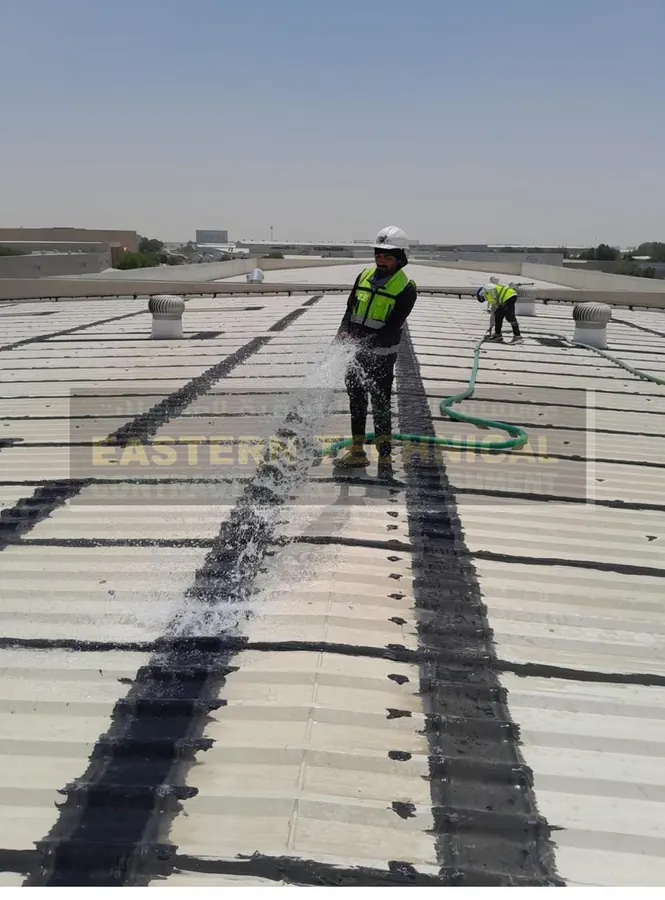
The trade-off is in the detail work and long-term movement. A coating alone is only as reliable as the preparation beneath it. If rust treatment, fastener correction, seam reinforcement, and substrate cleaning are weak, the coating will fail early at exactly the points where water finds entry. Coatings can work well for broad-area refurbishment, but on aging industrial roofs they usually need reinforcement fabric and careful treatment at all leak-prone details.
For facilities with minor deterioration and good drainage, coatings may be a reasonable approach. For roofs with severe joint movement, heavy corrosion, frequent penetrations, or recurring leaks at transitions, a coating-only strategy can become a maintenance cycle rather than a lasting solution.
Bituminous membranes
Bituminous systems have long been used in waterproofing, especially where multilayer build-ups are preferred. They can offer solid water resistance when properly installed on suitable substrates.
On industrial metal roofs, however, they are not always the easiest fit. Weight, detailing complexity, and compatibility with moving sheet profiles can be limiting factors. Heat-based application methods may also be less practical in active industrial settings. On simple concrete roofs they may still have a place, but for lightweight metal structures and profiled sheet roofs, they are often less flexible than modern alternatives.
PVC and TPO single-ply membranes
Single-ply membranes are widely used in commercial roofing and can perform well on large roof spans. They provide uniform waterproofing coverage and can be mechanically fixed or adhered depending on the design.
Their performance depends heavily on installation quality, welding consistency, and edge detailing. On industrial roofs with many protrusions and custom penetrations, installation skill becomes a major variable. They can be effective systems, but repairs and modifications later on may require specialized handling. In facilities where rooftop services are frequently added or changed, that can affect maintenance planning.
EPDM waterproofing systems
EPDM stands out in industrial applications because it handles movement well, resists weathering, and can be adapted to difficult details. For warehouses and factories with metal roofs, gutters, skylights, vent penetrations, and aging roof accessories, that flexibility is a serious advantage.
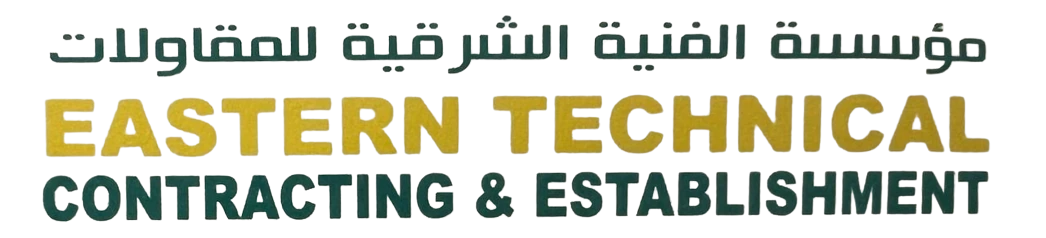
A properly engineered EPDM system is not just a sheet laid over a roof. It is a detail-driven solution used to treat vulnerable points that repeatedly leak under real operating conditions. EPDM performs especially well where expansion and contraction stress other materials, and where irregular details make rigid solutions less dependable.
The limitation is that not every roof should receive the same EPDM approach. Substrate condition, attachment method, edge termination, and detail design all matter. Good EPDM work is highly effective, but it needs experienced diagnosis and execution rather than generic installation.
Why industrial metal roofs need a different review standard
Warehouse roofs are not standard residential roofs on a larger scale. They move more, heat up more, and contain more interruption points. A single skin sheet roof behaves differently from a sandwich panel roof. Corrugated sheets have their own drainage and lap challenges. Metal roof rehabilitation also brings another layer of complexity because the waterproofing system has to work with existing deterioration, not just over a new surface.
That is why a roof waterproofing system review for industrial assets must include the roof type, sheet profile, corrosion level, previous repairs, and operational constraints. If production cannot stop, access may be limited. If stock is sensitive, leak risk at specific bays becomes more critical than full-roof appearance. If rooftop equipment is dense, penetration detailing becomes the deciding factor.
In these conditions, the best system is often the one that solves the failure pattern, not the one that sounds strongest in general terms.
Where systems usually fail first
Seams, fasteners, and end laps
On metal roofs, these are common leakage points because water is driven by wind, capillary action, and thermal movement. Any review should assess whether the system reinforces these lines or simply covers them.
Penetrations and roof-mounted services
Pipes, cable entries, ducts, smoke vents, and supports create irregular waterproofing transitions. Systems that look strong across open areas can fail quickly around these details if they are not designed and finished carefully.
Gutters, valleys, and drain points
Water concentration areas expose weak adhesion, poor slope, and substrate damage fast. In many warehouse buildings, the main leak complaint starts at the gutter line but is actually linked to broader detailing failure nearby.
Skylights and curb details
These areas are exposed to movement and often show sealant fatigue, cracked interfaces, or poor previous repairs. A durable solution needs more than surface patching.
Which system is best depends on the roof condition
If the roof is relatively sound and the goal is service-life extension, a reinforced coating system may be enough. If the roof has multiple recurring leaks at joints and details, EPDM-based treatment often gives a better long-term result. If the substrate is too far gone, no waterproofing system alone will compensate for structural failure, and rehabilitation works need to come first.
This is where many projects go wrong. The conversation starts with product selection before condition assessment. In practice, diagnosis should come first. The right contractor will inspect the leak pattern, roof build-up, corrosion exposure, drainage behavior, and detail complexity before recommending a system.
That is also why industrial clients often prefer a contractor that can inspect, diagnose, fabricate detail components where needed, install, and maintain under one scope. It reduces interface gaps and puts accountability in one place.
What decision-makers should ask before approval
A serious contractor should be able to explain where the current leaks originate, what preparation is required, how the selected system treats joints and penetrations, and what maintenance access will look like after installation. If the answer is focused only on coating thickness or membrane brand, the review is too shallow.
It also helps to ask how localized future repairs will be handled. Industrial roofs change over time. Equipment is added, access paths shift, and repairability becomes part of lifecycle value. A system that performs well but is difficult to modify later may not be the best fit for an active warehouse or factory.
For many industrial buildings, especially aging metal roofs, EPDM-based waterproofing remains one of the strongest options because it balances flexibility, detail treatment, and weather resistance. That said, the material alone is not the full answer. Surface preparation, rust treatment, termination quality, and site execution are what separate a durable installation from another temporary fix. This is where an experienced industrial specialist like ETCE KSA adds value – not by pushing one generic solution, but by matching the system to the roof’s real condition and failure points.
A good roof waterproofing decision should reduce emergency calls, protect operations, and buy back maintenance time. If the proposed system does not clearly do those three things, it is worth reviewing the roof again before spending on the wrong repair.
Related ETCE services
Need this checked on your own roof?
ETCE carries out industrial roof inspections, leak diagnosis, metal roof rehabilitation and EPDM waterproofing across Dammam, Al Khobar, Dhahran, Jubail, Riyadh and Jeddah.
Request a Roof Inspection WhatsApp UsMetal roof waterproofing across Saudi Arabia
ETCE is a metal roof waterproofing company in Saudi Arabia with its head office in Dammam. See our warehouse & factory roof waterproofing service or find your area: