A roof leak rarely starts as a dramatic failure. In most warehouses and factory buildings, it begins with a small weakness at a lap joint, fastener, penetration, gutter edge, or aging sheet connection. The top roof leak warning signs usually show up well before water starts dripping onto stock or equipment. The problem is that busy facility teams often see them as minor defects until corrosion, insulation saturation, and interior disruption make the repair larger and more expensive.
For industrial buildings, early detection is not just about preventing a stain on the ceiling. It is about protecting operations, electrical safety, inventory, machinery, and the steel structure below the roof system. Metal roofs, sandwich panels, corrugated sheets, and single-skin roofing all have predictable failure points. When you know where the first signs appear, you can act before a localized leak becomes a repeating maintenance issue.
Top roof leak warning signs on industrial buildings
One of the earliest signs is repeated moisture in the same zone after rain, washing, or condensation events. If your maintenance team keeps finding damp patches below skylights, ridge lines, vents, gutters, or roof penetrations, that pattern matters. Water rarely enters exactly where it becomes visible inside. It can travel along purlins, insulation facings, cable trays, or roof sheet profiles before it drops into the occupied space.
Another common warning sign is discoloration on the underside of the roof or on interior wall junctions near the top slab level. Brown marks, water rings, peeling paint, mold spots, and dust tracks stuck to damp surfaces all point to recurring moisture entry. In industrial buildings, these signs are sometimes dismissed because they dry out between rain events. That does not mean the leak is resolved. It usually means the entry point is still active but intermittent.
Watch for corrosion around fasteners, sheet laps, curb flashings, and gutter sections. Rust is not only a material aging issue. It often indicates that moisture is being trapped where protective coatings have broken down. On metal roofs, once fastener heads begin to corrode or loosen, the sealing washer can fail and create a direct water path. A roof may still look generally intact from a distance while leaking through dozens of small points.
Insulation behavior also tells a story. If thermal performance drops in one section of the building, or if insulated panels show swelling, staining, or unexplained surface temperature variation, water may already be inside the roof build-up. Wet insulation adds load, reduces energy efficiency, and holds moisture against metal components longer than many operators realize.
The failure points behind the warning signs
Industrial roofs do not fail at random. They fail at details. Penetrations for ducts, pipes, exhaust points, and supports are high-risk areas because movement, heat, vibration, and poor sealing all work against long-term waterproofing performance. If a leak appears near mechanical services, the issue is often at the penetration detail rather than the field of the roof sheet.
Skylights and smoke vents are another regular source of trouble. Their perimeter joints face constant expansion and contraction. Sealants harden, shrink, or detach. Mounting frames distort slightly over time. Once that happens, driven rain can enter even if the surrounding roof sheets still look serviceable.
Gutters deserve closer attention than they usually get. Standing water, debris buildup, overflow marks, and corrosion at joints are strong indicators of future leaks. In many warehouses, the first complaint comes from a wall leak or damp edge detail, when the actual cause is a failing gutter joint or blocked outlet pushing water back into the roof system.
Long sheet runs and overlaps also create risk, especially on older roofs. Thermal movement can widen laps, fatigue fasteners, and open capillary paths. On sandwich panel roofs, small defects at panel joints may allow water entry without producing an immediate internal drip. The moisture can remain hidden while damaging insulation and metal skins over time.
What your maintenance team should inspect first
Start with the building history. If leaks are seasonal, tied to wind direction, or repeatedly reported in the same zone, that narrows the inspection area. Maintenance logs, complaint records, and photos from prior rain events often reveal patterns faster than a general walkover.
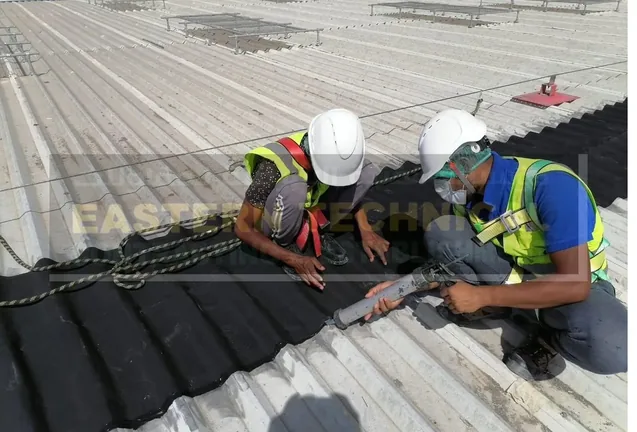
On the roof itself, inspect fasteners for backing out, missing caps, failed washers, and rust staining. Check sheet laps for gaps, old patching, or hardened sealant. Look closely at penetrations, curb upstands, and equipment supports where multiple materials meet. Transitions are where water finds its way in.
At gutters and drainage points, look for ponding marks, sediment, corrosion, separated joints, and overflow staining on adjacent walls or fascias. If outlets are partially blocked, water may sit long enough to expose weak seams that would otherwise remain unnoticed.
Inside the building, do not limit the check to obvious drips. Look above suspended ceilings, around column heads, near ridge areas, and along wall-to-roof junctions. Moisture meters, infrared checks, and targeted opening of suspect areas can confirm whether the leak is active, historic, or spreading through concealed paths.
When a small leak is already a larger problem
A small visible symptom can hide major roof deterioration. If water has entered insulation, corrosion may continue long after the weather clears. If leakage is near electrical runs, lighting, or production equipment, the risk is no longer just building fabric damage. It becomes an operational and safety issue.
This is especially true in active warehouses and factories where downtime is expensive. A minor leak over a storage aisle may seem manageable with catch buckets, but the real cost often shows up elsewhere – damaged packaging, reduced insulation performance, rusting purlins, recurring callouts, and emergency work during bad weather. Temporary control buys time, but it should not be mistaken for a durable solution.
There is also a difference between a leak source and a leak symptom. Teams sometimes reseal the area where water appears inside, only to find the problem returns after the next storm. On metal roof systems, water migration can be significant. Unless the inspection traces the route back to the true entry point, repairs stay reactive.
Why industrial roofs need a system approach
The top roof leak warning signs are useful only if they trigger the right response. For industrial assets, patchwork repairs from different vendors often create more interfaces, more incompatible materials, and more maintenance points. A roof with aging sheets, vulnerable penetrations, corroded gutters, and failed sealant lines usually needs an engineered repair strategy, not isolated spot treatment.
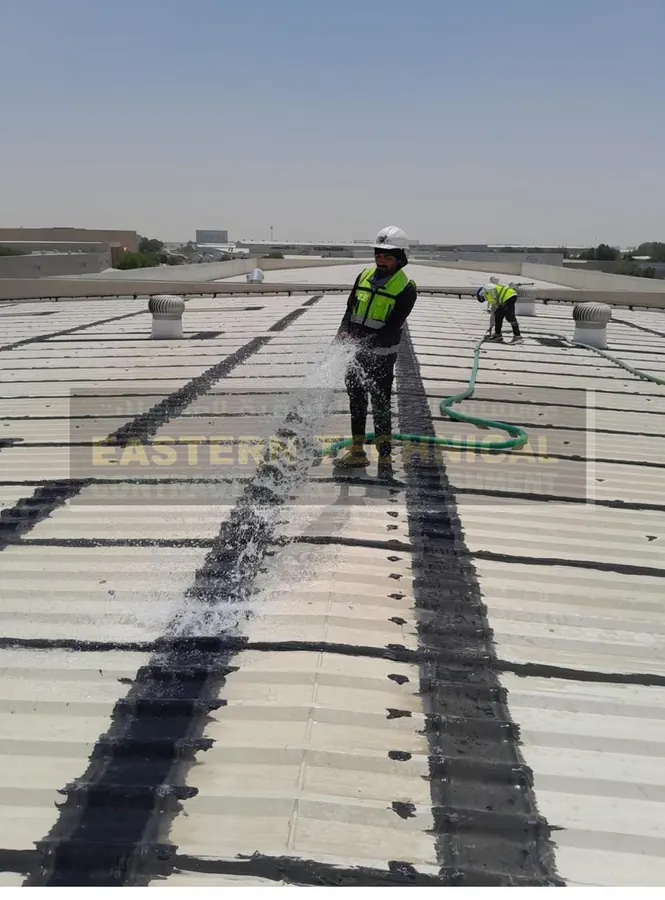
That may involve replacing damaged metal components, reworking flashing geometry, restoring drainage paths, and applying waterproofing systems designed for movement and weather exposure. EPDM-based waterproofing is often effective around difficult details such as penetrations, skylights, gutter joints, and transition points because it handles irregular shapes and thermal stress better than many short-life patch materials. But the right specification depends on roof type, condition, access needs, and how widespread the failure has become.
This is where experienced inspection matters. A proper assessment should identify whether the issue is local, systemic, or tied to aging across the roof. It should also separate active leak points from cosmetic staining left by previous events. For facility managers and project teams, that distinction helps prioritize spend and avoid repeating the same repairs every season.
Act before weather makes the decision for you
The best time to respond to leak warnings is before the next heavy rain, not during it. If your building is showing recurring damp spots, rust at roof details, swollen insulation, staining near penetrations, or overflow at gutters, the roof is already asking for attention. In industrial environments, delay usually expands the repair scope from waterproofing to sheet replacement, structural treatment, interior damage control, and operational disruption.
ETCE KSA works with exactly these problem points on warehouses, factories, and large industrial roofs where leaks rarely come from one simple cause. The practical advantage of early action is straightforward: you keep the defect small, protect the asset, and repair the roof on your schedule instead of the weather’s.
If your roof is giving early warnings, treat them like engineering data, not minor housekeeping. That mindset saves buildings, budgets, and a lot of unnecessary emergency work.
Related ETCE services
Need this checked on your own roof?
ETCE carries out industrial roof inspections, leak diagnosis, metal roof rehabilitation and EPDM waterproofing across Dammam, Al Khobar, Dhahran, Jubail, Riyadh and Jeddah.
Request a Roof Inspection WhatsApp UsMetal roof waterproofing across Saudi Arabia
ETCE is a metal roof waterproofing company in Saudi Arabia with its head office in Dammam. See our warehouse & factory roof waterproofing service or find your area: