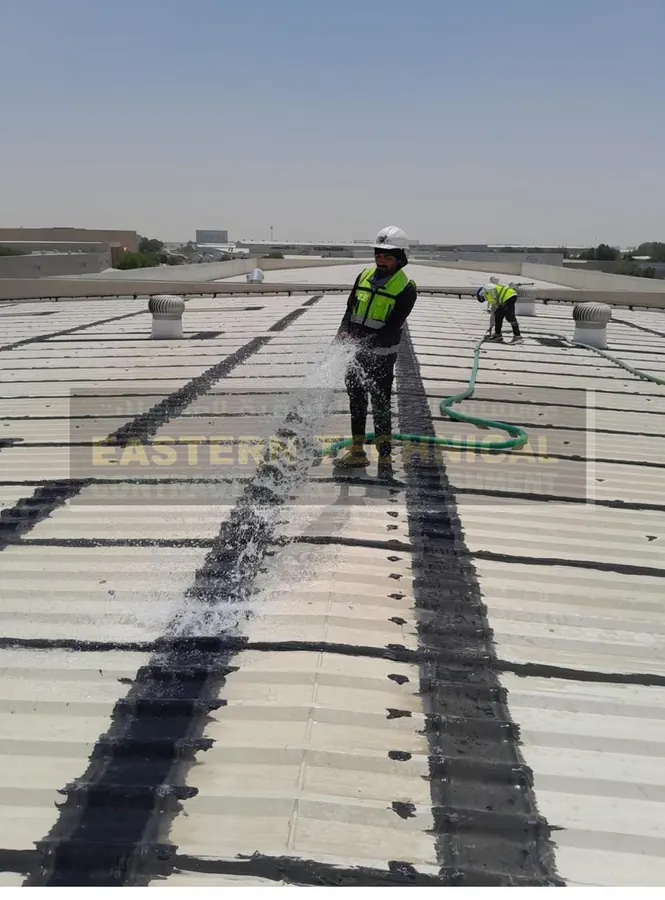
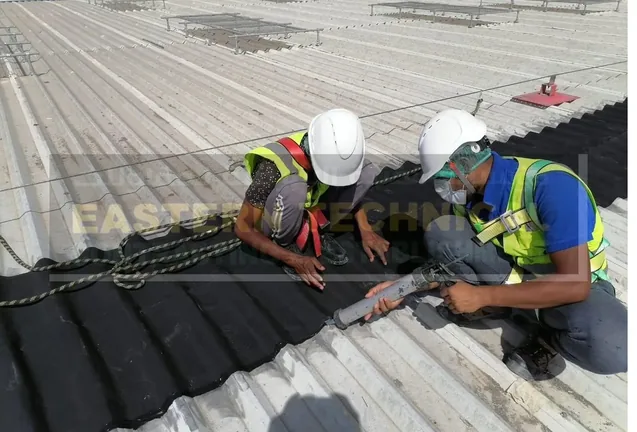
A warehouse roof rarely fails all at once. It starts at the lap joint that opens under thermal movement, the fastener that backs out, the gutter that holds standing water, or the skylight curb that was never sealed properly after years of heat and dust. That is why warehouse roof repair Riyadh is not a patching job by default. On industrial buildings, the real issue is usually a chain of failures across sheets, penetrations, drainage points, and support details.
For facility managers and owners, that distinction matters. A visible leak inside the warehouse may be the last symptom, not the first. By the time water reaches stock areas, electrical runs, or production zones, the roof system may already have corrosion, deteriorated sealant lines, weakened overlaps, and insulation damage hidden above the ceiling line or beneath metal sheets.
Why warehouse roof repair Riyadh needs a system view
Riyadh puts metal roofs under constant stress. High daytime temperatures, UV exposure, dust accumulation, and occasional stormwater events create a pattern of expansion, contraction, and accelerated aging. On older warehouses, every roof element responds differently. Metal sheets move. Fasteners loosen. Old mastics dry out. Ponding near gutters or drain points keeps moisture in contact with vulnerable areas longer than it should.
This is why a repair program has to look beyond the exact point where water entered the building. A technician may find leakage at one bay, but the root cause can sit several meters upslope at a flashing, ridge detail, or corroded screw line. In many cases, water tracks along purlins or sheet laps before it becomes visible below.
A proper assessment should identify whether the roof needs isolated repair, sectional rehabilitation, or a broader waterproofing upgrade. That decision affects cost, downtime, and service life. It also determines whether the work solves the issue for one season or several years.
The roof problems that usually show up first
On industrial warehouses, failure patterns are usually predictable. Fastener points are common trouble spots because repeated thermal cycling can enlarge holes and reduce compression at washers. Once that seal is compromised, water ingress starts around screw penetrations and spreads into adjacent sheet interfaces.
Lap joints are another regular failure area. On corrugated sheets, single skin roofs, and sandwich panel systems, the overlap lines depend heavily on proper fixing pressure and sealant condition. When these joints age, wind-driven rain can enter even if the metal panels themselves still look intact from a distance.
Gutters and roof valleys often create the next layer of problems. Dust and debris slow drainage, standing water develops, and corrosion starts at the lowest points first. If those sections are already thin or rusted, patching without reinforcing the surrounding area rarely lasts.
Penetrations deserve special attention. Duct supports, vent pipes, smoke vents, cable entries, and skylights interrupt the roof plane. Every one of those openings needs movement-tolerant detailing. Hard, brittle sealants usually fail early in these locations, especially on older metal roofs where movement is more pronounced.
When repair is enough and when rehabilitation makes more sense
Not every leaking roof needs replacement. That is good news for owners trying to control maintenance budgets and avoid operational disruption. But not every leak can be solved with spot sealing either.
If the roof sheets remain structurally sound, corrosion is limited, and leakage is concentrated at details such as laps, fasteners, gutters, or penetrations, a targeted repair strategy is often the right move. This approach can include re-fastening, replacing failed screws, treating rusted sections, rebuilding flashings, and applying EPDM-based waterproofing at vulnerable joints and transition points.
If the roof has recurring leaks across multiple zones, widespread oxidation, deteriorated drainage lines, and repeated repair history, rehabilitation is usually more practical than chasing individual defects. Rehabilitation extends roof life without the cost and downtime of a full tear-off. It also gives the contractor a chance to correct original detailing problems that basic patch work never addressed.
The trade-off is straightforward. Localized repair costs less upfront, but only when the underlying roof condition supports it. Rehabilitation costs more initially, yet it often reduces repeat callouts, internal damage risk, and production interruption over time.
What a serious inspection should cover
A useful roof inspection for an industrial facility does more than confirm that water is entering. It should map failure points, rank urgency, and connect defects to a repair scope that can actually be executed on a live site.
That means checking sheet condition, seams, fastener lines, ridge details, penetrations, gutters, downtake points, skylight curbs, and previous repair areas. It also means documenting corrosion severity rather than simply labeling everything as rust. Surface oxidation, section loss, and perforation are different conditions, and they do not receive the same treatment.
Moisture paths should be traced with site logic in mind. Warehouses often have long roof spans and repeated structural bays, so the visible leak area can mislead maintenance teams. A good inspection reads the roof as a drainage and movement system, not as a set of isolated defects.
For owners managing active logistics or factory operations, speed matters too. A free site inspection with a detailed report is useful only if it translates into a workable plan, material selection, and a crew that can mobilize without dragging the issue across multiple vendors.
Why EPDM-based waterproofing is often used on difficult leak points
Metal roof leaks are rarely uniform, which is why flexible waterproofing systems matter. EPDM-based repair solutions are often used where the roof has movement, irregular geometry, or repeated leakage around transitions. These areas include gutters, penetrations, drain points, skylights, and connection details between different roof elements.
The value of an EPDM-based system is not just water resistance. It is its ability to maintain performance where rigid patch materials crack, shrink, or lose adhesion under heat and roof movement. On aging warehouse roofs, that movement tolerance is a major advantage.
Still, material choice depends on the substrate and failure type. A rusted sheet with serious section loss may need metal repair or replacement before waterproofing is applied. A blocked drainage line needs correction before any membrane work will perform as intended. Good repair work respects sequence. Structure and substrate first, waterproofing after.
Execution on an active warehouse site
Industrial clients do not judge roof work only by technical drawings. They judge it by whether operations continue safely and whether the leak actually stops. That makes execution discipline just as important as the repair design.
Crew access, material handling, permit controls, weather timing, and internal protection all have to be planned around the facility. In some cases, work can be phased by roof zone to avoid interrupting storage, dispatch, or manufacturing schedules. In others, emergency containment is needed first, followed by permanent repair once the area is stabilized.
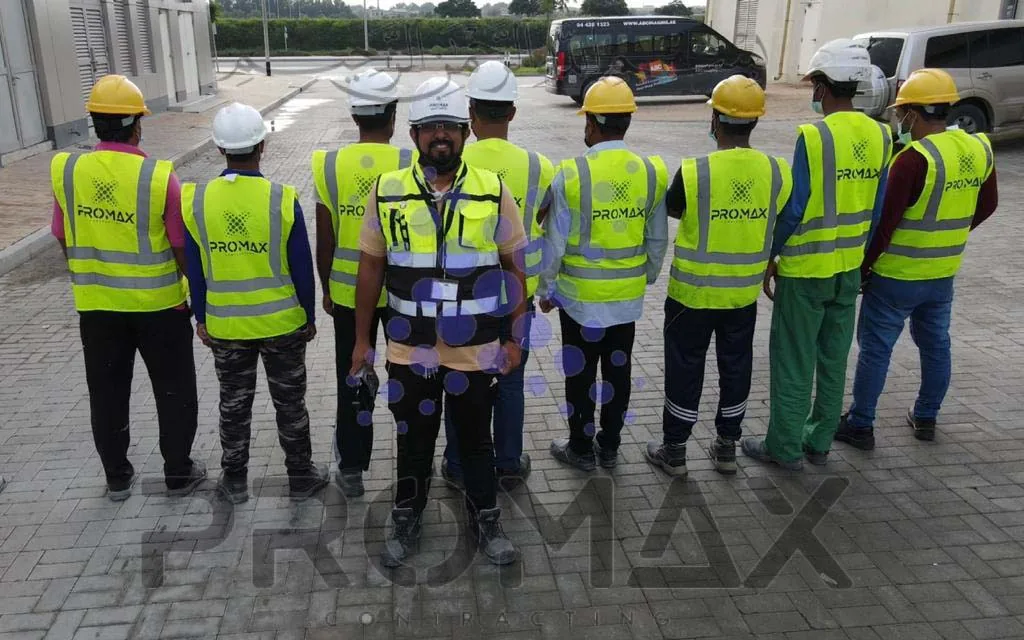
This is where a single contractor model helps. When one team can inspect, diagnose, fabricate repair components, install waterproofing, and return for maintenance support, the process gets tighter. There is less delay between finding the problem and correcting it properly. For large industrial roofs, that coordination can be the difference between a manageable repair and a rolling maintenance problem.
Choosing a contractor for warehouse roof repair Riyadh
The right contractor should be able to explain failure mechanisms clearly, not just quote a repair area. Ask how they handle metal roof movement, corroded sections, drainage defects, and recurring leak points around penetrations. Ask whether they can support both urgent repair and longer-term rehabilitation if the inspection shows wider deterioration.
Experience with warehouses and factories matters because these roofs behave differently from small commercial buildings. Long spans, exposed fastener systems, old patch histories, and operational constraints demand a contractor that works like an industrial maintenance partner, not a general handyman crew.
In Riyadh, response time matters as well. A small leak can become a stock, equipment, or safety issue faster than expected, especially when damage spreads through insulation or along steel elements. Companies such as ETCE KSA position their service around that reality by combining inspection, engineered repair scopes, specialized waterproofing, and after-sales support under one umbrella.
The best time to act is before the next visible leak. If your warehouse roof already shows rust, loose fasteners, gutter overflow, failed sealants, or repeat water entry at the same locations, the roof is asking for more than another temporary patch. A focused inspection now usually costs far less than waiting for internal damage to make the decision for you.
Related ETCE services
Need this checked on your own roof?
ETCE carries out industrial roof inspections, leak diagnosis, metal roof rehabilitation and EPDM waterproofing across Dammam, Al Khobar, Dhahran, Jubail, Riyadh and Jeddah.
Request a Roof Inspection WhatsApp UsMetal roof waterproofing across Saudi Arabia
ETCE is a metal roof waterproofing company in Saudi Arabia with its head office in Dammam. See our warehouse & factory roof waterproofing service or find your area: