
A leak above a storage aisle is rarely just a roof problem. It can damage stock, interrupt loading schedules, corrode steel members, create slip hazards, and force emergency repairs at the worst possible time. Effective warehouse waterproofing protects the full building envelope, not just the visibly damaged area, so water is controlled before it reaches operations.
For warehouse operators and facility teams, the priority is not applying a coating as quickly as possible. The priority is finding the actual entry point, correcting the failed detail, and installing a system that can tolerate heat, movement, standing water, and routine maintenance traffic. A repair that looks acceptable from ground level can still fail early if laps, fasteners, drainage outlets, or penetrations have been overlooked.
Warehouse Waterproofing Starts With Diagnosis
Water does not always enter where the stain appears. On a large metal or concrete roof, water can travel along purlins, insulation, deck laps, service lines, and internal channels before it drips into the warehouse. Treating the visible stain without tracing the route often leads to repeat callouts and unnecessary expense.
A proper site inspection should assess the roof slope, existing membrane condition, screw and fastener corrosion, flashing details, gutter capacity, expansion joints, skylights, pipe penetrations, and connections between roof and wall surfaces. The inspection should also identify areas where previous repairs have created incompatible layers or trapped moisture below the surface.
This is especially relevant in facilities exposed to high heat, UV radiation, wind-driven rain, and dust accumulation. Heat causes metal sheets and structural components to expand and contract. When a rigid repair material cannot accommodate that movement, cracks can open around seams and penetrations. A waterproofing recommendation must therefore be based on the roof type, condition, drainage behavior, and expected movement - not on a single material being used for every project.
Where Warehouse Leaks Actually Begin
Roof sheet laps and corroded fasteners
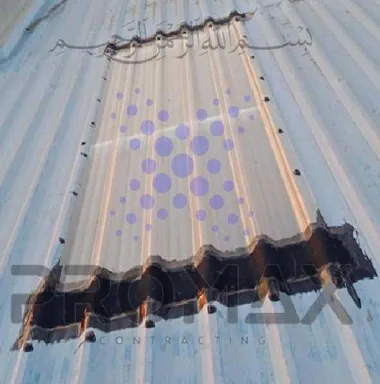
Metal roof laps are common failure points. Sealants dry out, screws loosen, washers deteriorate, and corrosion expands around fixing points. Once water passes through these openings, it can run beneath the roof sheet and appear far from the original defect.
Fastener treatment is not simply a matter of adding sealant over screw heads. Failed screws may require replacement, corrosion may need to be treated, and surrounding sheet areas must be checked for thinning metal. On older roofs, the condition of purlins and supporting connections should also be assessed before waterproofing proceeds.
Pipe penetrations, vents, and skylights
Every roof penetration interrupts the waterproof layer. Pipes, conduits, exhaust vents, cable routes, curbs, and skylight frames need flexible, properly terminated sealing details. These areas move differently from the roof surface, particularly during daily temperature changes.
Skylights need particular attention because their frames, fixings, and surrounding flashings can all become leak paths. Applying material around the edge without preparing the substrate or correcting loose components may only delay the next failure.
Gutters and drainage outlets
Blocked gutters are one of the most avoidable causes of warehouse water damage. Dust, leaves, packaging debris, and loose corrosion particles can restrict drainage until water backs up under roof laps or over gutter edges. In severe cases, standing water adds load to already stressed roof areas.
Gutter replacement or repair may be necessary when joints have separated, slopes are inadequate, outlets are undersized, or corrosion has perforated the channel. Waterproofing the roof while ignoring failed drainage transfers the problem rather than solving it. The roof system and drainage system must work as one.
Roof-to-wall joints and expansion details
Water often enters at transition points where dissimilar surfaces meet. Parapet edges, wall flashings, expansion joints, and service-room interfaces are exposed to movement and weather. These details require compatible materials and careful termination, not broad application of a generic coating.
Selecting the Right Waterproofing System
There is no single best system for every warehouse. A sound technical recommendation considers the substrate, roof geometry, existing treatment, access requirements, expected service life, and budget for long-term maintenance.
EPDM-based waterproofing systems are often suitable where flexibility and weather resistance are required. Properly specified EPDM membranes can accommodate movement and provide dependable coverage across large roof areas, but their performance depends on substrate preparation, seam treatment, edge termination, and detailing around penetrations. The membrane itself is only one part of the finished system.
Liquid-applied treatments can be effective on irregular surfaces and complicated details, provided the surface is dry, stable, and correctly prepared. They may be appropriate for localized repairs or specific junctions, while larger deteriorated areas may require a more comprehensive membrane solution. The decision depends on the condition of the roof, not just the size of the leak.
For metal roofs, waterproofing work commonly includes rust treatment, replacement of failed fasteners, seam sealing, flashing repair, and protective treatment of affected sheet areas. If corrosion has compromised the metal substrate, surface-level waterproofing alone is not a durable answer. Damaged sections may need fabrication and replacement before the protective system is installed.
Installation Detail Determines Service Life
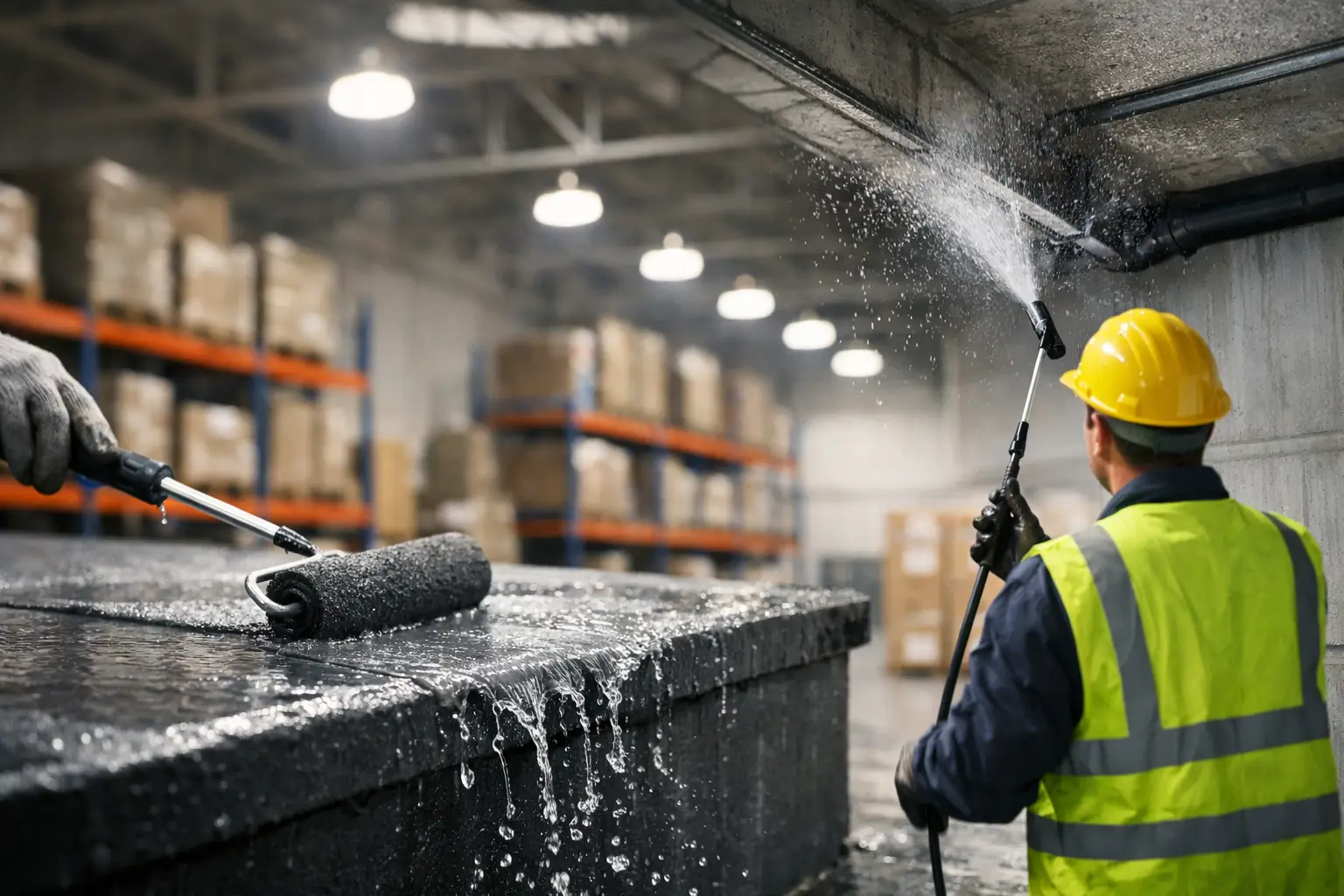
Most premature failures are installation failures rather than material failures. Dust, moisture, loose coatings, surface oxidation, and poor adhesion can undermine even a high-quality system. The work sequence should include cleaning, mechanical preparation where required, repair of damaged substrate areas, treatment of joints and penetrations, membrane or coating application, and final inspection of terminations.
Edges deserve the same attention as open roof fields. A membrane that is well bonded across a roof can still fail where it turns up at a wall, ends at a gutter, or meets a skylight frame. These locations need mechanically secure terminations and compatible sealants designed for the movement and exposure they will face.
Quality control should be visible during the project, not only after completion. Facility representatives should be able to see how wet areas were handled, which damaged components were replaced, how penetrations were detailed, and whether drainage routes were tested. This record is valuable for future maintenance planning and warranty discussions.
Plan the Work Around Warehouse Operations
Warehouse waterproofing does not always require a full shutdown, but it does require coordination. Access routes, material staging, roof loading limits, safety procedures, and weather windows must be planned before work begins. For active facilities, contractors should separate work zones from loading areas and protect inventory beneath known leak locations.
Phased execution can reduce disruption on large roofs. A contractor can divide the building into sections, complete repairs and waterproofing in controlled areas, then move across the roof after inspection. This approach is useful where operations cannot stop or where different roof sections have different levels of deterioration.
Safety access is also part of the long-term solution. If maintenance teams cannot safely reach gutters, skylights, or roof equipment, small defects will remain untreated until they become major leaks. Proper access systems and planned inspection points make preventive maintenance practical rather than reactive.
Signs Your Warehouse Needs Immediate Attention
Some leakage problems can be scheduled into a maintenance program. Others need quick action to prevent damage from spreading. Arrange an inspection when you see repeated water stains, dripping around penetrations, rust streaks below roof joints, overflowing gutters, loose roof sheets, or damp insulation visible from inside the building.
Also pay attention to patterns after weather events. If leaks occur only during wind-driven rain, the issue may be related to flashing direction, side laps, or wall transitions rather than a simple hole in the roof. If water appears after several dry days, trapped moisture or condensation may be contributing to the problem. The diagnosis should distinguish these conditions before repairs are selected.
Make Waterproofing a Planned Asset Protection Program
Emergency patching has a place when water is actively entering the building, but it should lead to a full assessment rather than become a permanent strategy. Repeated small repairs can hide corrosion, drainage failure, and deteriorating roof details until the repair scope becomes far more expensive.
A practical maintenance program includes scheduled roof inspections, gutter cleaning, prompt treatment of damaged fasteners and joints, checks around skylights and penetrations, and documentation of every repair. In demanding warehouse environments, this routine extends roof life and helps protect the building, stored goods, and daily operations.
The most useful next step is simple: inspect the roof before the next leak dictates the schedule. A clear site assessment gives facility teams the evidence needed to prioritize repairs, budget accurately, and choose a waterproofing system built for the conditions the warehouse actually faces.
Related ETCE services
Need this checked on your own roof?
ETCE carries out industrial roof inspections, leak diagnosis, metal roof rehabilitation and EPDM waterproofing across Dammam, Al Khobar, Dhahran, Jubail, Riyadh and Jeddah.
Request a Roof Inspection WhatsApp Us