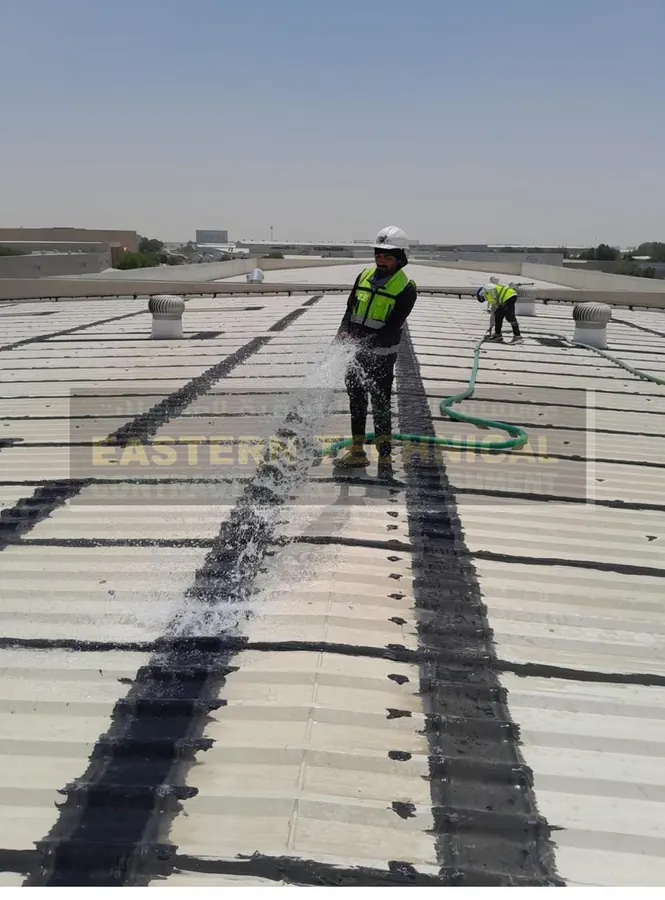
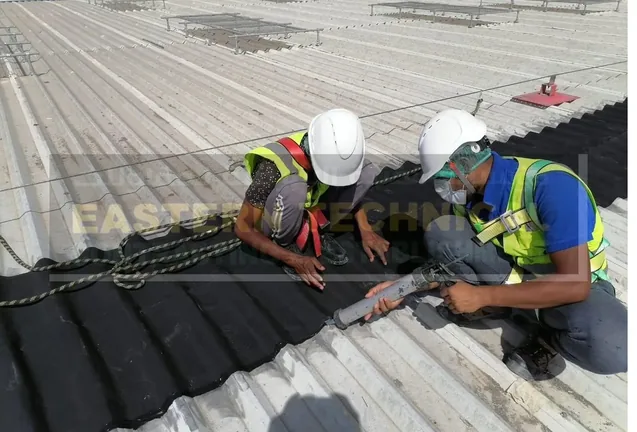

A warehouse roof can appear sound from ground level while concealed leaks, corroded fasteners, blocked gutters, and failed penetration seals continue damaging the building below. A disciplined facility roof inspection checklist gives maintenance teams a practical way to find those conditions early, prioritize the right repairs, and protect operations from avoidable disruption.
For industrial buildings, roof inspections should not be treated as a quick visual walk. Metal sheets, sandwich panels, gutters, skylights, smoke vents, pipe penetrations, and drainage points work as one weatherproofing system. A failure at one detail can direct water beneath adjacent sheets, saturate insulation, accelerate rust, and create internal leaks far from the original entry point.
Set the Inspection Scope Before Going on the Roof
Start with safety and site information. Confirm roof access requirements, permit procedures, fall-protection arrangements, safe walk paths, weather conditions, and any production activity below that could be affected by the inspection. Wet roofs, loose sheets, weak skylights, and unprotected edges require controlled access, not improvised maintenance.
Review previous leak reports, repair records, roof drawings, and photographs before the site walk. Repeated leaks near a gutter, expansion joint, skylight, or pipe penetration often indicate a failed detail rather than an isolated crack. This history helps the inspector distinguish between a local repair requirement and a broader rehabilitation issue.
For large warehouses and factories, divide the roof into identifiable zones. Use grid references, roof elevations, or bay numbers so every finding can be located again by the repair team. A report that says “leak near the north side” creates delays. A report that identifies “Grid B-7, west-facing roof slope, 2 meters upslope from gutter” supports fast action.
Facility Roof Inspection Checklist: Exterior Roof Surface
Begin at the general roof field, then move methodically toward laps, edges, transitions, and drainage components. The goal is to identify both current water entry points and conditions likely to fail during the next rain event.
Inspect the roof surface for the following conditions:
- Loose, missing, overdriven, or corroded fasteners. Fastener washers can harden, crack, flatten, or detach after long exposure to heat and ultraviolet radiation.
- Open sheet laps, damaged side-lap stitching, displaced sealant tapes, and visible gaps between metal panels.
- Rusting, pinholes, coating breakdown, surface blistering, and oxidation around fasteners, cut edges, overlaps, and areas where water ponds.
- Dented, punctured, distorted, or unsecured metal sheets, especially around service routes, equipment access paths, and previous repair areas.
- Cracked or lifting waterproofing materials, including failed patches that have lost adhesion at their edges.
- Signs of ponding water, dirt rings, algae growth, sediment buildup, or staining that show drainage is slow or incomplete.
On corrugated and single-skin metal roofs, inspect every overlap carefully. Water can travel along corrugations and emerge inside the building several meters from the failed fastener or lap. On sandwich panel roofs, check panel joints, end laps, closures, and exposed insulation at damaged edges. If insulation is wet, compressed, or visible, the repair scope may need to include panel replacement rather than surface sealing alone.
Heat exposure is a major factor in Saudi industrial facilities. Constant expansion and contraction can fatigue sealants, loosen fixings, and open joints that looked acceptable during an earlier inspection. The repair method must allow for movement. Applying generic sealant over a moving joint may stop a leak temporarily but can fail again when the metal cycles through another period of intense heat.
Check Existing Repairs With a Critical Eye
Previous repairs deserve close examination. Look for patches applied over rust without proper preparation, incompatible materials, unsealed patch edges, trapped water, and repairs that bridge moving joints without reinforcement. A patch is only as reliable as the substrate beneath it.
EPDM rubberized waterproofing is often suitable for difficult details such as penetrations, gutters, skylights, smoke vents, and irregular transitions because it can form a continuous flexible membrane over complex shapes. However, material selection depends on roof condition, drainage design, substrate preparation, and the size of the affected area. A local EPDM detail repair will not correct widespread corroded sheets that have lost structural integrity.
Inspect Drainage, Gutters, and Rainwater Paths
Drainage failures are among the most common reasons industrial roofs deteriorate faster than expected. A roof may have adequate slope on paper but still retain water because gutters are blocked, outlets are undersized, downpipes are damaged, or sheet lines have sagged.
Check gutters for corrosion, open joints, failed end caps, loose supports, holes, standing water, debris, and damage at outlet connections. Internal box gutters require particular attention because a hidden leak can affect walls, cladding, and structural members before it becomes visible in the occupied space.
Inspect drain points and downpipes to confirm water has a clear path from the roof to discharge. Look for crushed sections, disconnected joints, leakage at elbows, and debris at strainers. During or immediately after rainfall, observe where water actually accumulates. This often provides more useful evidence than a dry-weather inspection alone.
Do not overlook roof edges and eaves. Water overflowing a blocked gutter can wet sheet edges, wall interfaces, fascia components, and steel supports. Over time, this creates corrosion that is more expensive to repair than routine cleaning and detail waterproofing.
Examine Penetrations, Skylights, and Roof Interfaces
Most persistent warehouse leaks occur at interruptions in the roof plane, not in the center of a metal sheet. Every penetration requires a flexible, well-bonded, mechanically secure waterproofing detail that accommodates movement and directs water downslope.
Inspect pipes, ducts, cable trays, exhaust bases, equipment curbs, and supports for cracked sealant, split flashings, loose clamps, open corners, and unsupported penetrations. Avoid accepting excessive sealant buildup as a permanent repair. Thick sealant alone is vulnerable to ultraviolet exposure and movement unless it is part of a designed waterproofing assembly.
At skylights and smoke vents, check perimeter flashing, curb joints, fasteners, corner conditions, glazing seals, and the roof sheet interface. Skylights can become brittle with age, while their surrounding flashings are exposed to movement and concentrated runoff. Any weak detail here should be prioritized because water can enter directly above active storage, machinery, or personnel areas.
Also inspect wall-to-roof junctions, parapets, ridge caps, expansion joints, and interfaces with adjacent roof levels. These transitions experience wind pressure and thermal movement that can pull apart weak sealant joints or unsecured flashings.
Inspect the Interior for Evidence the Roof Is Failing
An effective facility roof inspection checklist includes an internal walk-through. Water entry points on the roof do not always match the visible location of internal staining. Follow the building layout, then compare indoor observations with roof zones and drainage paths.
Look for ceiling stains, dripping, wet insulation, rusted purlins, corroded brackets, damp walls, peeling coatings, mold-like growth, damaged electrical containment, and water marks around skylights or service penetrations. Inspect during rain where possible, but do not wait for a severe leak before documenting the condition.
Pay close attention to steel framing and connections below known ponding areas or gutter lines. Repeated moisture exposure can lead to hidden corrosion and reduce the service life of the building structure. If water has reached electrical equipment, stored goods, or production areas, classify the finding as urgent even when the visible roof defect seems small.
Record Findings So Repairs Can Be Planned Correctly
Each defect should have photographs, a location reference, a description, estimated affected area, likely cause, and recommended action. Separate urgent water-entry risks from planned maintenance items. A useful priority system is immediate action for active leaks and safety hazards, short-term repair for advancing corrosion or open details, and scheduled maintenance for cleaning, recoating, or early-stage deterioration.
The inspection report should also state whether each condition is suitable for localized repair, detail waterproofing, partial sheet replacement, gutter rehabilitation, or wider roof restoration. This distinction matters for budgeting. Repeatedly repairing individual leaks on an aging roof may cost more over time than a planned rehabilitation program that addresses corrosion, joints, drainage, and vulnerable details together.
For active industrial sites, inspection frequency depends on roof age, material, operating conditions, previous leak history, and exposure to dust, wind, heat, and moisture. At minimum, inspect before the rainy season, after significant storms, and whenever a new leak appears. Older metal roofs, buildings with internal gutters, and facilities with frequent roof access usually need more regular reviews.
A roof inspection is most valuable when it produces a clear work plan, not just a defect list. ETCE KSA approaches industrial roof maintenance by connecting diagnosis, detail design, waterproofing execution, fabrication needs, and after-sales support under one coordinated scope. That reduces the risk of one contractor identifying a problem while another is left to guess how to repair it.
Treat every minor stain, loose flashing, or blocked outlet as useful evidence. Acting while the failure is still localized gives facility teams more control over cost, timing, and operational continuity than waiting for the next storm to make the decision for them.
Related ETCE services
Need this checked on your own roof?
ETCE carries out industrial roof inspections, leak diagnosis, metal roof rehabilitation and EPDM waterproofing across Dammam, Al Khobar, Dhahran, Jubail, Riyadh and Jeddah.
Request a Roof Inspection WhatsApp UsMetal roof waterproofing across Saudi Arabia
ETCE is a metal roof waterproofing company in Saudi Arabia with its head office in Dammam. See our warehouse & factory roof waterproofing service or find your area: