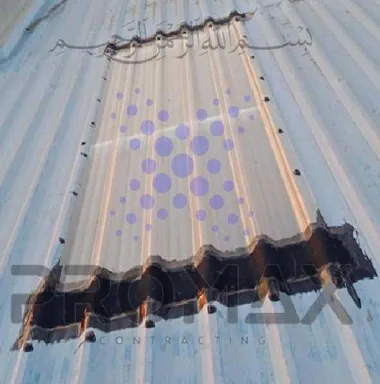
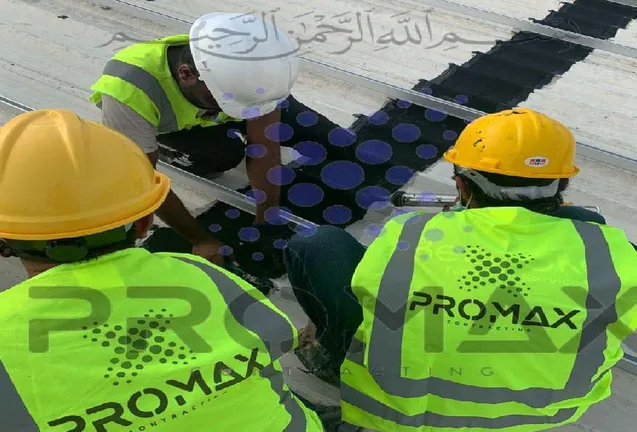
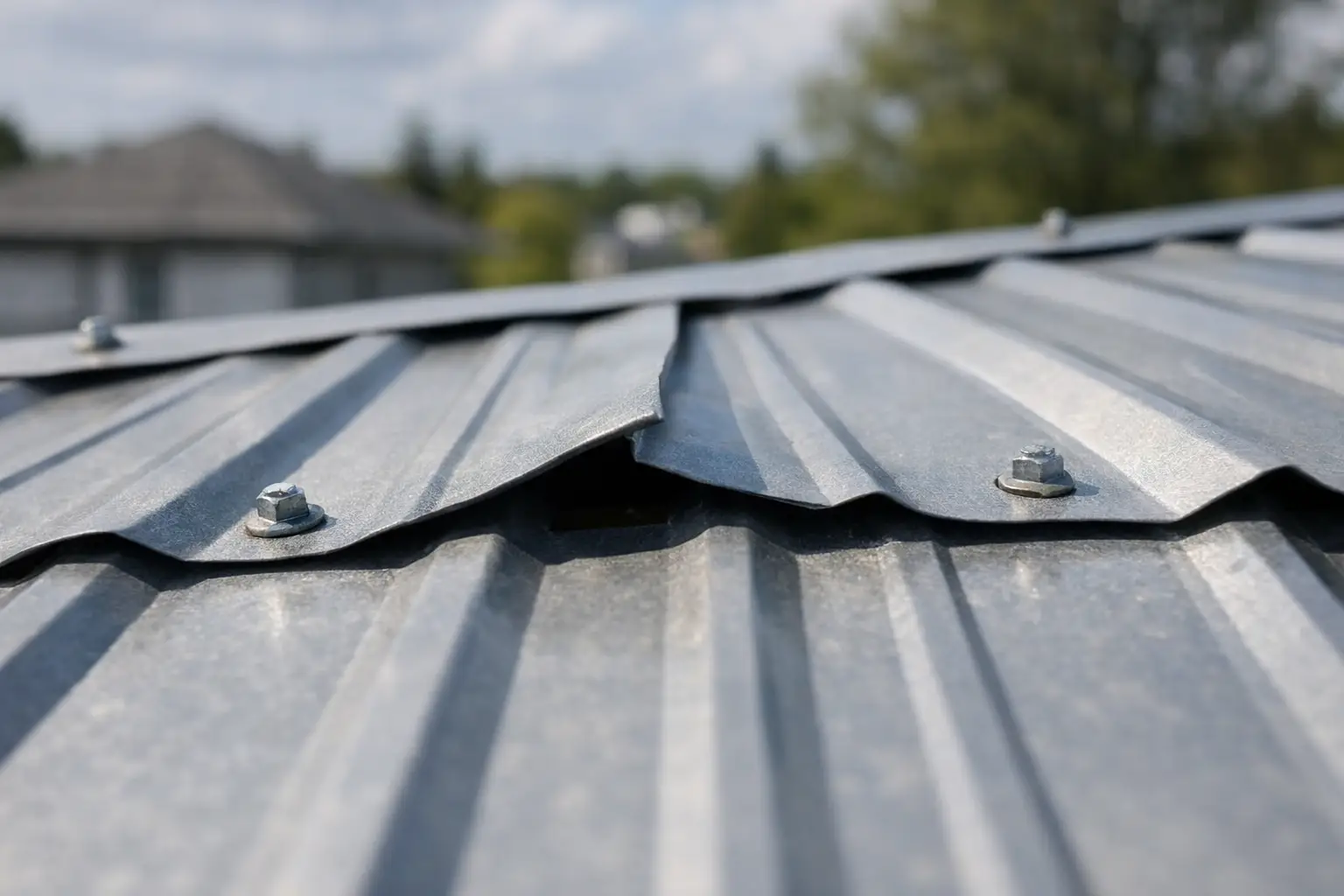
A metal roof that clicks in the afternoon, lifts at a lap joint during high wind, or shows elongated screw holes is giving an early warning. Understanding what causes roof sheet movement helps facility teams separate normal thermal movement from conditions that can lead to leaks, corrosion, damaged insulation, and progressive roof failure.
On warehouses, factories, storage buildings, and other large-span facilities, roof sheets are exposed to intense sun, rapid temperature changes, wind uplift, vibration, and years of service loading. Sheet movement is not always a defect. Metal naturally expands and contracts. The problem begins when the roof system cannot accommodate that movement or when its fastening, support, drainage, and waterproofing details have deteriorated.
What Causes Roof Sheet Movement?
Roof sheet movement usually comes from a combination of thermal expansion, loose or incorrect fasteners, wind pressure, inadequate structural support, and poor installation details. A site inspection should identify the source before any sealing or coating work begins. Treating only the visible leak without correcting the movement often produces a short-lived repair.
Thermal expansion and contraction
Metal roof sheets expand when exposed to heat and contract as temperatures fall. In hot climates, the surface temperature of a dark metal roof can become far higher than the surrounding air temperature. A long sheet may therefore move noticeably over the course of a day.
This movement is expected when the roof has correctly designed fixing points, appropriate sheet lengths, expansion provisions, and flexible weatherproofing details. It becomes a concern when sheets are fixed too rigidly, overlapping sections are restrained, or fasteners are over-tightened. The sheet then pushes, pulls, or buckles around the point of restraint.
Thermal movement can create popping noises, wrinkling near fastener lines, displaced flashings, or split sealant at penetrations. These symptoms may be more noticeable after sunrise, during late afternoon cooling, or across seasons.
Loose, damaged, or incorrectly installed fasteners
Fasteners are one of the most common reasons roof sheets begin to move excessively. Screws can loosen after repeated expansion and contraction, wind vibration, corrosion, or years of minor movement around the hole. Once a screw loses its holding capacity, the sheet can lift and rub against the fastener shank.
Over-tightening is also a problem. A compressed washer may crack, deform, or lose its ability to seal. Under-tightened screws leave the sheet insufficiently restrained. Incorrect screw type, wrong fixing location, unsuitable washer material, or inadequate embedment into the supporting member can all reduce pull-out resistance.
A moving sheet can enlarge the screw hole into an oval shape. At that point, installing another standard screw in the same opening may not restore the required holding strength. The repair may require an oversized fastener, a new fixing position, reinforcement of the support below, or replacement of the affected sheet section.
Wind uplift and pressure changes
Wind does not act evenly across a roof. Corners, edges, ridge areas, eaves, and zones around changes in roof level experience higher uplift pressures. A sheet that appears secure in the center of a roof may still lift at its perimeter during a storm.
Wind-related movement is more likely where fastening patterns do not match the roof geometry, old fasteners have corroded, or replacement sheets were installed without considering local uplift zones. Open doors, louvers, and pressure changes inside large facilities can add to the loading on the roof system.
Repeated uplift can fatigue fasteners, loosen side laps, separate sealant tapes, and damage flashings. If a sheet visibly flutters or lifts in wind, it requires urgent assessment. This is not simply a noise issue. It can escalate into sheet detachment and a serious safety risk.
Weak or deteriorated purlins and support members
Roof sheets depend on properly spaced, stable purlins or other structural support members. Where supports have corroded, shifted, deflected, or been damaged by previous alterations, the sheet may flex more than intended. The movement may be concentrated along a specific line, especially near a sagging or weakened support.
Long-term water ingress often accelerates this issue. Moisture trapped below sheet laps or around penetrations can corrode concealed steelwork while the roof surface still appears acceptable from a distance. A repair that focuses only on resealing the top side may leave the underlying cause untouched.
During inspection, the contractor should check sheet bearing, fastener engagement, purlin condition, spacing, and signs of deformation. If the supporting structure is compromised, purlin repair or replacement may be required before installing new waterproofing materials.
Poor lap details and inadequate allowance for movement
Metal sheets move at overlaps, end laps, ridges, gutters, and penetrations. These locations require careful detailing because they combine water flow with thermal and wind movement.
Problems often occur when side laps lack the correct stitch fasteners, old sealant has hardened, or the overlap is too short for the roof slope and exposure. End laps may open when sheets move in opposite directions. Around skylights, vent pipes, ducts, and other penetrations, rigid sealants can split as the surrounding metal expands and contracts.
A compatible flexible membrane system can provide a more durable weatherproofing layer across vulnerable joints, provided the substrate is cleaned, prepared, and stabilized first. Membrane coverage is not a substitute for loose-sheet repairs. The sheet must be secure before waterproofing is applied.
Corrosion below the surface
Rust is not only a cosmetic issue. Corrosion reduces metal thickness, weakens screw holding, opens lap joints, and can undermine flashings from below. It is especially common where water ponds, gutters overflow, dissimilar metals meet, or condensation is trapped beneath the roof sheet.
Early corrosion may show as staining around screws, bubbling paint, rust lines at overlaps, or reddish runoff on walls and gutters. More advanced corrosion can leave the sheet too thin to retain fasteners or accept a reliable repair. In those cases, localized sheet replacement and proper rust treatment are more dependable than repeatedly applying sealant.
How to Tell Normal Movement From a Roof Defect
Some expansion noise is normal on a large metal roof. The key question is whether the roof can move without losing its weatherproofing or structural restraint. A roof needs investigation when movement is accompanied by leaks, rattling sheets, loose screws, torn washers, opened laps, cracked sealant, or visible buckling.
Water marks inside the building are also useful clues, but they do not always sit directly beneath the roof defect. Water can travel along purlins, insulation layers, conduits, or sheet laps before it becomes visible inside. Inspection should follow the roof slope, drainage path, and overlap direction rather than relying only on the location of the interior stain.
Facility teams should also record when the issue occurs. Noise limited to peak heat may point to thermal expansion. Movement during high winds points more strongly to uplift and fastening failure. Persistent leaks after rain may involve laps, drainage, penetrations, or corrosion. More than one factor is common on aging roofs.
Repairing Roof Sheet Movement Properly
The right repair begins with a physical roof survey, not a blanket application of sealant. The inspection should map loose sheets, failed fasteners, corroded areas, open laps, damaged flashings, standing water, gutter condition, and support deterioration. Photos and marked roof plans help prioritize urgent areas without disrupting facility operations.
The repair sequence typically starts by securing the sheets and correcting damaged supports. Loose or failed screws are replaced with suitable fasteners, while enlarged holes and weakened metal receive an engineered repair approach. Corroded sections are cleaned, treated, reinforced, or replaced based on remaining metal condition.
Once the roof is mechanically stable, the contractor can reseal laps, repair penetrations, renew flashings, and apply a compatible waterproofing system where required. EPDM-based systems are often used for their flexibility and ability to accommodate controlled movement, but the selected material must suit the roof profile, substrate condition, exposure, and drainage arrangement.
Drainage should never be ignored. Blocked, undersized, or leaking gutters keep water at sheet edges and laps, accelerating corrosion and placing extra stress on already weak areas. Gutter repair, replacement, and correct discharge details are part of protecting the roof, not separate maintenance items.
Preventing Repeat Movement Problems
A durable repair depends on matching the solution to the roof's actual behavior. Thermal movement needs flexible details and correct fixing methods. Wind uplift needs adequate fastening and secure perimeter zones. Corroded supports require structural attention. Persistent leakage needs the water path traced from roof surface to drainage outlet.
Promax Contracting approaches metal roof rehabilitation as a combined inspection, repair, fabrication, and waterproofing task. This prevents the common mistake of covering a moving roof sheet before the fasteners, support members, and water-entry points have been corrected.
A metal roof does not need to be completely still. It needs to move in a controlled way, remain firmly connected to its supports, and stay watertight at every lap, screw, edge, and penetration. Acting when the first noises, loose fasteners, or small leaks appear is usually the most cost-effective way to protect the building below.
Related ETCE services
Need this checked on your own roof?
ETCE carries out industrial roof inspections, leak diagnosis, metal roof rehabilitation and EPDM waterproofing across Dammam, Al Khobar, Dhahran, Jubail, Riyadh and Jeddah.
Request a Roof Inspection WhatsApp Us