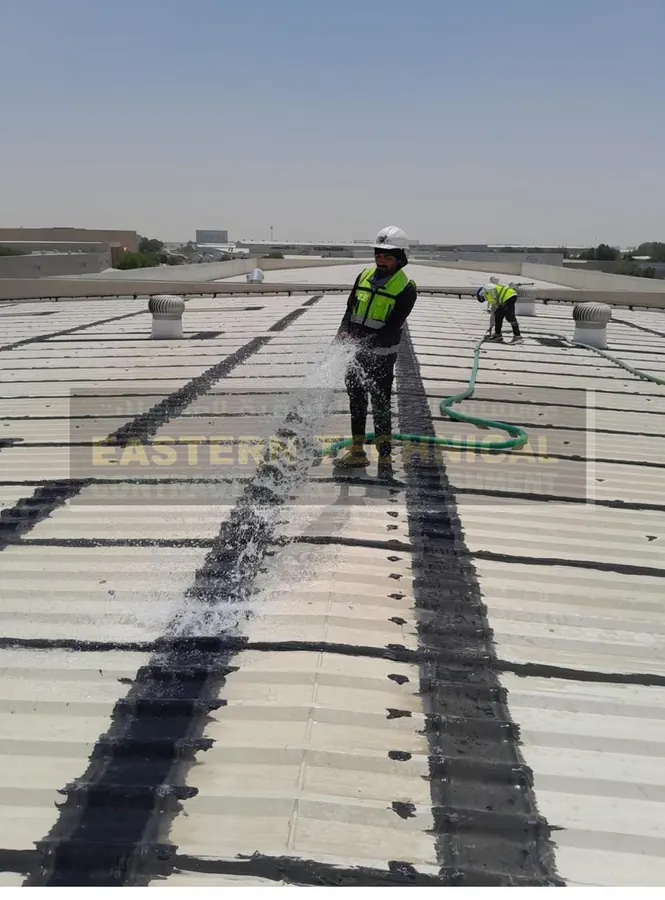
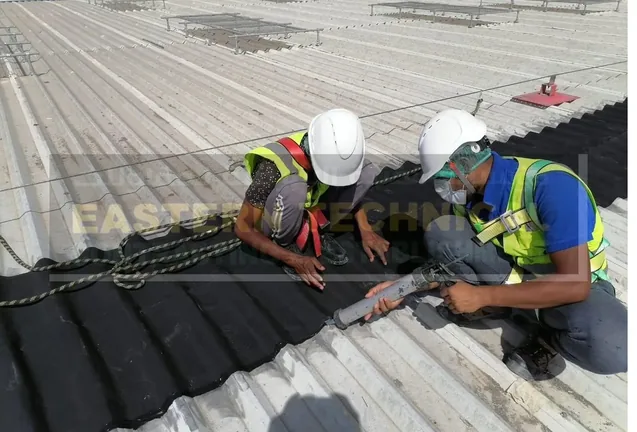
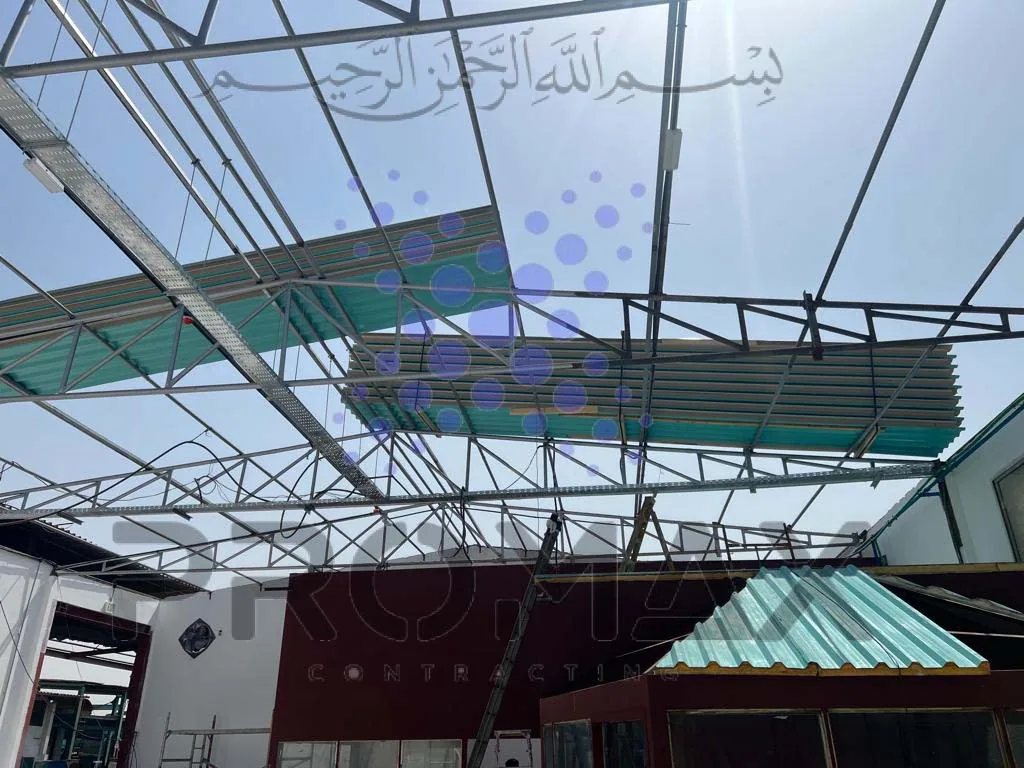
A warehouse roof rarely fails all at once. What usually happens is slower and more expensive – recurring leaks around fasteners, rust at laps and gutters, wet insulation, interior damage, and emergency patching that keeps the building running for another season. If you are asking when should warehouse roofs be restored, the right time is usually before active leaks turn into structural deterioration, production disruption, and a full replacement decision.
For industrial and logistics facilities, timing matters as much as the repair method. Restore too early and you may spend capital before the roof has fully used its service life. Wait too long and corrosion, failed seams, and hidden moisture can push the roof past the point where restoration is technically sound. The correct answer depends on roof condition, leak history, substrate integrity, and how the building operates day to day.
When should warehouse roofs be restored instead of replaced?
A roof is a restoration candidate when the main roof structure is still sound, but the weatherproofing performance has declined. This is common with metal warehouse roofs, sandwich panel roofs, corrugated sheets, and aging single-skin systems that have developed localized corrosion, failed sealants, loose fasteners, movement at overlaps, and leakage around penetrations.
Restoration makes sense when defects are widespread but still repairable. In practical terms, that means the roof has clear aging symptoms across multiple areas, yet the panels, purlin support conditions, and overall assembly are not severely compromised. If the roof can still be stabilized, cleaned, repaired, resealed, and waterproofed with a durable system, restoration often delivers better value than tearing off the entire assembly.
Replacement becomes more likely when corrosion has perforated major sections, the substrate has lost structural reliability, insulation is saturated across large areas, or past patching has created a roof with too many incompatible materials and failure points. That is why condition assessment matters more than age alone.
The signs your warehouse roof is at the restoration stage
Facility teams often wait for obvious leaks, but the restoration window usually opens earlier. One of the first signs is repeat leakage in the same zones after rainfall or washdown exposure. If maintenance crews are revisiting skylights, smoke vents, end laps, gutters, drain points, or penetrations every few months, the roof is no longer dealing with water in a controlled way.
Visible rust is another strong indicator. Surface oxidation can often be treated as part of a restoration scope, but once rust starts spreading around fasteners, sheet overlaps, cut edges, and gutter lines, the roof is telling you that protective layers have broken down. Left alone, corrosion widens entry paths for water and weakens connection points.
Movement-related failure also matters. Industrial roofs expand and contract under high heat, especially in exposed warehouse environments. Over time, this movement stresses joints, sealants, flashings, and fastener locations. You may see separation at laps, cracks around penetrations, uplifted edges, or open points at transitions. These issues are often repairable if addressed before the surrounding metal deforms beyond recovery.
Inside the building, water staining, damp insulation, mold odor, drips near ridge lines or columns, and recurring ceiling-level condensation complaints can all point to a roof that needs more than isolated patchwork. Rising interior heat gain can also signal that the roof system is no longer performing as intended.
Age matters, but condition matters more
Many warehouse owners try to set a restoration schedule by years in service. That can be useful, but it is not enough on its own. Two roofs installed in the same year can be in very different condition depending on exposure, design, maintenance history, drainage performance, and the quality of original installation.
A metal warehouse roof may be ready for restoration well before the end of its theoretical service life if it has been exposed to ponding, poor detailing, chemical contaminants, frequent foot traffic, or long periods without preventive maintenance. On the other hand, an older roof with good drainage and limited corrosion may still be a strong restoration candidate.
The practical approach is to combine age with inspection data. If a roof is in mid-to-late life and showing multiple failure symptoms, restoration should be evaluated immediately. Waiting for one more rainy season usually adds repair scope, not certainty.
Why industrial warehouses should not wait for major leakage
In a warehouse or factory, roof failure is not just a building envelope issue. It can affect inventory, electrical systems, racking areas, equipment reliability, staff safety, and operating continuity. Small leaks over production zones, loading areas, or storage lines can create costs far beyond the roof itself.
There is also the hidden damage problem. Water can travel along panels, insulation layers, cable routes, and structural members before it appears inside the building. By the time the leak becomes visible, the actual entry point may have been active for months. That is why emergency patching often feels ineffective – it addresses the symptom, not the whole water path.
Restoration done at the right stage interrupts that cycle. It allows the roof to be systematically inspected, defective details repaired, corrosion treated, weak points reinforced, and waterproofing upgraded before the damage spreads deeper into the asset.
High-risk areas that usually trigger restoration
On warehouse roofs, failure rarely occurs uniformly. Certain areas age faster and should drive your timing decision.
Penetrations are one of the biggest triggers. Pipe penetrations, equipment supports, ducts, skylights, and smoke vents create joints, corners, and movement points that are difficult to keep watertight over time. If these locations show recurring leakage, a broader restoration strategy is usually needed.
Gutters and drain points are another major concern. Blockage, standing water, corrosion, and failed joints can cause overflow and backwater entry into roof laps and wall connections. Once gutter deterioration starts affecting adjacent roof sheets, delay becomes expensive.
Fastener lines, end laps, side laps, and ridge details also deserve attention. These are common weakness zones on metal and corrugated warehouse roofs, especially after years of thermal cycling and UV exposure. A roof with repeated failures across these details is usually at the restoration stage even if large field areas still look acceptable from a distance.
What a proper restoration assessment should include
A serious roof restoration decision should start with a technical inspection, not a price request based on square footage. The assessment should identify leak entry points, corrosion depth, panel condition, failed sealants, loose or backed-out fasteners, drainage problems, damaged flashing, compromised penetrations, and any signs of substrate weakness.
Moisture mapping and close inspection of hidden details can change the scope significantly. So can understanding how the facility operates. A warehouse with sensitive goods, critical uptime demands, or restricted shutdown windows may need a restoration method that prioritizes phased work, low disruption, and fast return to service.
This is where specialized waterproofing systems become important. For many industrial roofs, restoration is not just coating over defects. It involves targeted rehabilitation of problem zones using engineered materials that can handle movement, seal difficult geometries, and protect aging metal from continued water ingress and rust progression. On leak-prone warehouse roofs, EPDM-based waterproofing is often selected for gutters, penetrations, skylights, and other difficult points because those areas are where patch repairs tend to fail first.
The trade-off between patching and full restoration
There is a place for localized repair. If damage is isolated and the rest of the roof is in good condition, targeted repair is sensible. But once the same roof needs repeated interventions across multiple zones, patching becomes a cost that hides the real problem.
The trade-off is simple. Small repairs are cheaper today, while restoration is often cheaper over the operating life of the roof. Restoration also gives facility managers a clearer maintenance path, better risk control, and fewer emergency callouts. For active industrial sites, that predictability has real value.
A contractor with inspection, fabrication, waterproofing, and maintenance capability under one scope can usually deliver a more reliable result because the details are coordinated from diagnosis through execution. That is especially relevant on large warehouse roofs where leakage may involve sheet condition, flashing geometry, drainage correction, and waterproofing at the same time.
So when should warehouse roofs be restored?
The best time is when the roof has moved beyond isolated defects but has not yet crossed into widespread structural failure. If you are seeing repeated leaks, rust development, movement-related joint failure, drainage issues, or recurring problems around penetrations and gutters, the restoration window is open now.
For warehouse owners and facility teams in demanding climates such as Saudi Arabia, heat, UV, sand, and moisture cycles accelerate roof aging in ways that are easy to underestimate from ground level. A timely inspection with a clear technical report is usually the most cost-effective next step. ETCE KSA works in exactly this part of the problem – identifying whether a roof can be restored, where the true failure points are, and how to extend service life with durable waterproofing and metal roof rehabilitation.
A roof does not need to be collapsing to justify action. It only needs to be showing you, consistently, that water is getting a second chance.
Related ETCE services
Need this checked on your own roof?
ETCE carries out industrial roof inspections, leak diagnosis, metal roof rehabilitation and EPDM waterproofing across Dammam, Al Khobar, Dhahran, Jubail, Riyadh and Jeddah.
Request a Roof Inspection WhatsApp UsMetal roof waterproofing across Saudi Arabia
ETCE is a metal roof waterproofing company in Saudi Arabia with its head office in Dammam. See our warehouse & factory roof waterproofing service or find your area: