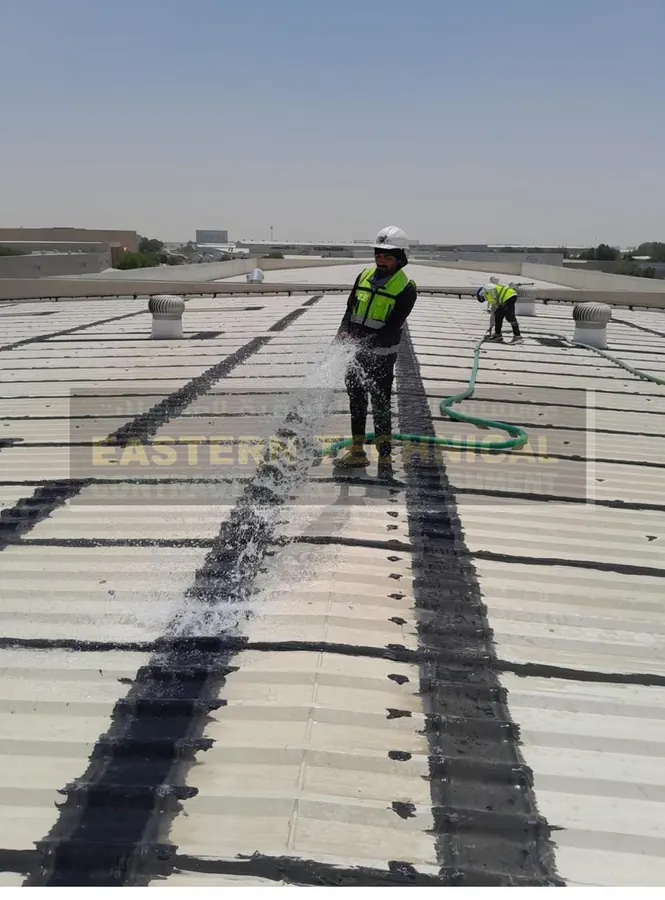
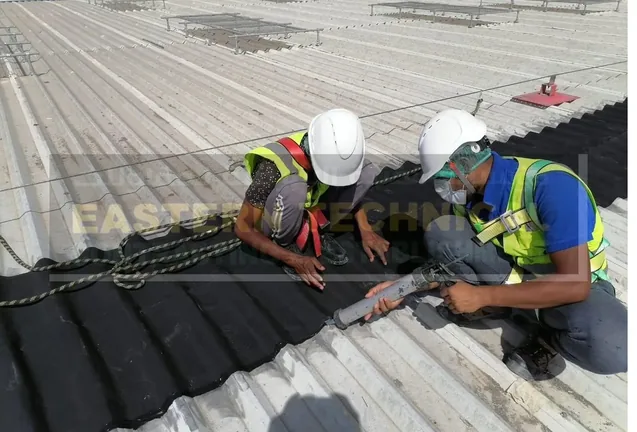
A roof leak above an active warehouse aisle, production line, or stored inventory is not a minor maintenance issue. In Dammam’s heat, dust, humidity, and occasional heavy rain events, a small opening at a sheet lap or penetration can quickly become corrosion, damaged insulation, unsafe electrical exposure, and operational disruption. Effective industrial roof leak repair Dammam work must address the source of water entry, not simply cover the visible stain inside the building.
For industrial facilities, a repair is successful only when it remains watertight through thermal movement, UV exposure, wind-driven rain, and routine roof access. That requires a proper inspection, compatible materials, controlled surface preparation, and workmanship suited to large metal roof systems.
Why Industrial Roof Leaks Develop
Industrial roofs rarely fail in one dramatic event. More often, water finds a path through small defects that expand over time. Metal sheets move as temperatures rise and fall. Fasteners loosen, washers harden, sealants crack, and joints that were once tight begin to open. On older facilities, rust around screw holes and laps can turn a manageable maintenance item into a larger rehabilitation requirement.
Sandwich panel roofs have their own failure patterns. The panel joints, closures, flashings, and interface points around roof-mounted equipment must remain sealed while accommodating movement. If water reaches the insulation core or internal joints, the visible leak can appear far from the actual entry point. This is why applying sealant from the inside of the building is usually a temporary measure at best.
Single-skin corrugated sheets are especially exposed at overlaps, ridge connections, end laps, and fastener lines. Poor drainage compounds the problem. Ponding water in gutters, blocked drain points, and low spots around roof details keep materials wet longer and accelerate deterioration.
Industrial Roof Leak Repair in Dammam Starts With Diagnosis
A durable repair begins with a roof-level investigation. The objective is to identify both the active water path and the conditions that will cause the same failure again. A detailed site inspection should review the roof covering, fasteners, sheet laps, ridge caps, gutters, flashings, skylights, smoke vents, drains, penetrations, and areas where previous repairs have been applied.
Interior signs are useful, but they are not enough. Drips may travel along purlins, insulation, cable trays, or internal roof profiles before reaching the ceiling below. The entry point can be several meters away from the visible wet area. Inspection teams should trace the building geometry, drainage direction, roof slope, and nearby details before selecting a repair method.
The condition of the substrate matters as much as the leak location. A clean, sound metal surface can accept a localized waterproofing repair. A corroded sheet with perforations, loose fasteners, or widespread coating failure may need sheet treatment, reinforcement, or a broader rehabilitation system. Treating severely degraded metal as if it were a simple sealant joint leads to repeat callouts and avoidable cost.
Repair Methods Must Match the Failure Point
There is no single material or application method that suits every industrial roof leak. The right solution depends on the roof profile, age, movement, exposure, and the condition of surrounding components.
Fasteners, Laps, and Corroded Sheet Edges
Loose or failed fasteners are common on large metal roofs. Replacement fasteners must be correctly sized and installed with suitable sealing washers. Where corrosion has enlarged the hole or weakened the sheet, simply tightening the existing screw will not solve the problem. The area may require cleaning, rust treatment, reinforcement, and a waterproofing detail that bridges the affected zone.
Sheet laps must be checked for separation, failed sealant, and capillary water entry. Repair work typically involves removing loose material, preparing the surface, sealing the joint, and applying a reinforced waterproofing treatment where needed. The goal is to create a continuous barrier without trapping moisture or leaving open termination edges.
Gutters, Drains, and Valley Details
Gutters are frequently overlooked until water begins overflowing into the building. In industrial facilities, dust, debris, deteriorated joints, and standing water can cause leakage along long gutter runs. The repair scope should include cleaning, checking falls toward outlets, repairing joints and end connections, and treating corrosion before waterproofing is applied.
Drain points need special attention because they concentrate water movement. A repair that ends short of the drain flange or fails to seal the transition correctly will often leak again during heavy rain. The waterproofing system must be shaped and terminated to direct water into the outlet, not around it.
Skylights, Smoke Vents, and Roof Penetrations
Penetrations are among the highest-risk areas on any industrial roof. Duct supports, pipe sleeves, exhaust points, cable routes, skylights, and smoke vents create interruptions in the roof surface. These details move differently from the surrounding sheets, particularly where metal expands under direct sun exposure.
EPDM rubberized waterproofing systems are highly effective for difficult penetrations and irregular transitions because they provide flexibility and strong weather resistance when correctly installed. They can be fabricated and detailed around complex shapes, making them suitable for roof areas where conventional sealant-only repairs repeatedly fail. However, EPDM performance still depends on substrate preparation, proper adhesion, compatible primers, edge treatment, and protection at vulnerable locations.
Surface Preparation Determines Repair Life
The difference between a short-term patch and a durable waterproofing repair is often surface preparation. Metal roof surfaces must be cleaned of dust, oil, loose paint, old failed sealant, and corrosion products before waterproofing materials are installed. Wet substrates, unstable rust layers, and poorly prepared laps reduce adhesion and create weak points beneath the finished repair.
Preparation should also account for site conditions. On an operational warehouse, the contractor must control debris, protect interior operations where access points are opened, and plan work around weather. Applying a system shortly before rain, or on a surface affected by condensation, is a preventable risk. Experienced industrial teams schedule the work sequence around these realities rather than treating waterproofing as a generic maintenance task.
Where corrosion is extensive, repair decisions should be made honestly. Localized restoration may be cost-effective when the roof remains structurally sound. If deterioration affects broad areas, repeated spot repairs can become more expensive than a planned rehabilitation program. A condition report helps facility teams compare immediate repair costs against the longer-term risk of water damage, roof failure, and unscheduled shutdowns.
Keep the Facility Operating During Repair Work
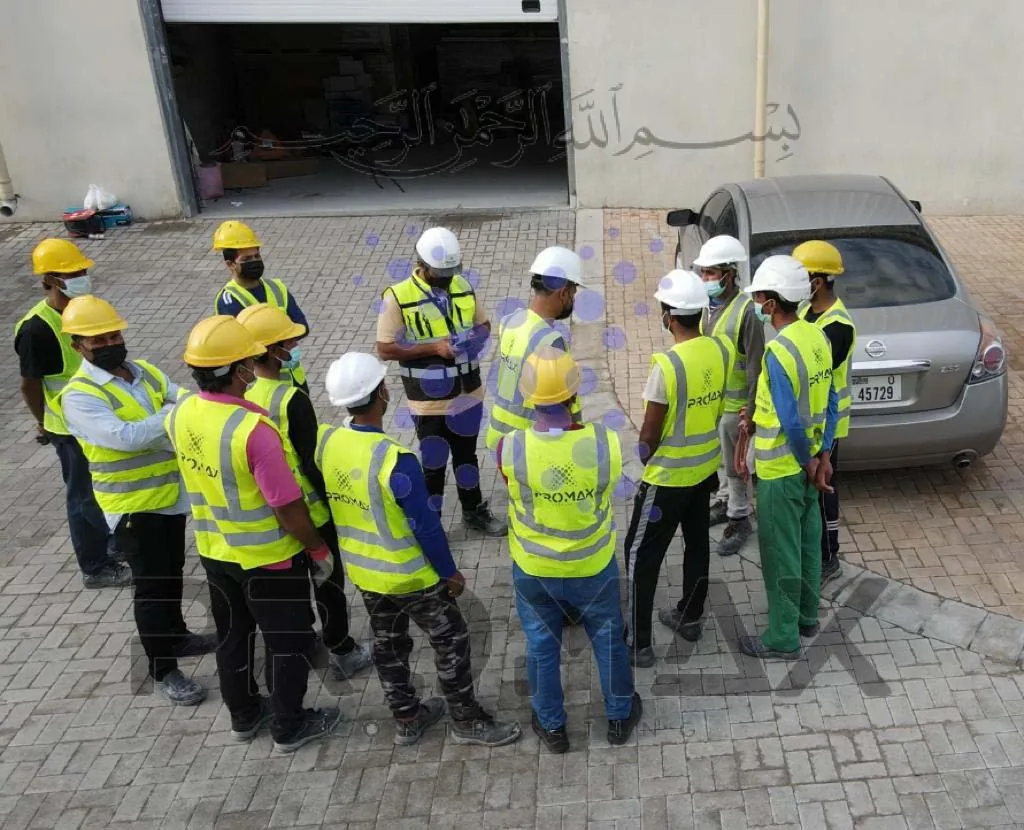
Industrial roof repair should be organized around the facility’s operating requirements. Warehouses may need protected loading areas, factories may have sensitive equipment below active repair zones, and logistics sites may require clear access throughout the day. The contractor’s method statement should address access routes, material handling, safety controls, work zones, and the response plan if weather changes during installation.
Fast response matters when water is already entering the building, but speed should not mean skipping diagnosis. A practical approach is to first contain the active leak, then complete a permanent repair after inspecting adjacent laps, flashings, gutters, and penetrations. This prevents the common cycle of fixing one visible point while a related defect remains untreated nearby.
ETCE KSA approaches industrial roof maintenance as an engineered site service, combining inspection, diagnosis, waterproofing design, fabrication, installation, and follow-up support. For facility managers, using one contractor across these connected activities reduces coordination gaps between inspection findings and field execution.
Plan Maintenance Before the Next Rain Event
A repaired roof still needs periodic inspection. Heat, UV exposure, sand accumulation, and routine access by maintenance teams gradually affect fasteners, seals, and drainage paths. Preventive visits are particularly valuable before the rainy season and after major weather events, when small defects can be identified before they reach the interior.
A useful maintenance record should track the repaired area, materials used, date of work, photos, nearby risk points, and recommended follow-up timing. This gives operations and procurement teams a clear basis for budgeting and prevents each new leak report from starting with zero site history.
The most cost-effective industrial roof repair is usually the one completed before the leak spreads through insulation, steel components, inventory, or critical operations. Treat early water entry as a roof-system warning, investigate it from the exterior, and repair the full failure point with materials built for industrial exposure.
Related ETCE services
Need this checked on your own roof?
ETCE carries out industrial roof inspections, leak diagnosis, metal roof rehabilitation and EPDM waterproofing across Dammam, Al Khobar, Dhahran, Jubail, Riyadh and Jeddah.
Request a Roof Inspection WhatsApp UsMetal roof waterproofing across Saudi Arabia
ETCE is a metal roof waterproofing company in Saudi Arabia with its head office in Dammam. See our warehouse & factory roof waterproofing service or find your area: