A warehouse roof rarely fails all at once. Water first enters around a loose fastener, an aged lap joint, a curb, or a patched penetration. Then corrosion spreads beneath the sheet, insulation becomes damp, and a manageable repair turns into lost operating time. Industrial roof coatings can stop that progression, but only when the coating system is designed around the roof’s actual condition and its known failure points.
For factories, logistics buildings, storage sheds, and large warehouses, the objective is not simply to make the roof look renewed. The objective is to create a watertight, maintainable roof assembly that can tolerate extreme UV exposure, high surface temperatures, wind-driven rain, sand, movement at joints, and the daily demands of an occupied facility.
What Industrial Roof Coatings Are Designed to Do
An industrial roof coating is a liquid-applied protective system installed over a prepared roof surface. Once cured, it forms a continuous membrane that can reduce water entry, shield exposed metal from further oxidation, and provide a reflective surface where heat management is part of the project requirement.
On metal roofs, coatings are commonly used to rehabilitate aging corrugated sheets, single-skin roofs, sandwich panel roofs, gutters, flashing areas, and sections affected by surface rust. A properly specified system can extend the useful service life of the existing roof and reduce the need for disruptive sheet replacement.
That does not mean every leaking roof should receive a coating. Coatings are rehabilitation systems, not a way to hide structural defects. If sheets are severely perforated, purlins are compromised, fastener pull-out is widespread, or trapped moisture has damaged the roof build-up, repairs or replacement may be required before any coating work begins.
Start With Roof Condition, Not Product Selection
The most common mistake in roof rehabilitation is choosing a material before completing a roof survey. A coating that performs well on a sound metal substrate can fail quickly when applied over loose rust, weak sealant, wet insulation, or poorly secured panels.
A useful inspection should identify the roof type, slopes, drainage paths, panel condition, corrosion level, previous repairs, fastener condition, and every penetration through the roof. Skylights, smoke vents, pipe supports, HVAC curbs, ducts, gutters, expansion areas, and drain points need individual attention. These are not secondary details. They are often where the first leaks occur.
The inspection should also distinguish between active leaks and historic water staining. A ceiling mark does not always indicate the point of entry directly above it. Water can travel along roof sheets, insulation, steel members, or service penetrations before becoming visible inside the building. Proper diagnosis saves material, labor, and repeat callouts.
For operating sites, the survey should include access planning. Facility managers need to know how crews will reach the roof, where materials will be stored, whether work will affect loading bays or production areas, and how weather exposure will be managed during repair. A technically correct system still needs an execution plan that keeps the facility working.
Surface Preparation Controls Coating Performance
The lifespan of industrial roof coatings depends heavily on surface preparation. A coating can only bond to the substrate beneath it. If that substrate is contaminated, unstable, or damp, the new membrane is at risk of peeling, blistering, or early failure.
Preparation normally starts with cleaning to remove dust, sand, oxidation residue, oils, biological growth, and loose previous coatings. On metal roofs, corroded areas must be mechanically treated until unstable rust is removed and the remaining surface is suitable for priming. Deeply corroded sheets may need local reinforcement or replacement rather than additional coating thickness.
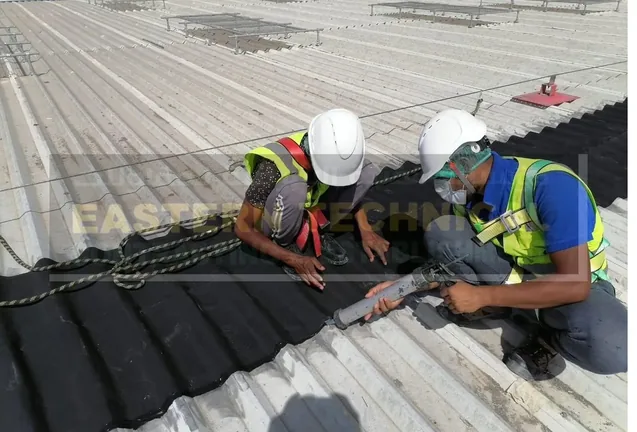
Fasteners deserve the same level of attention. Loose, missing, or deteriorated fasteners should be replaced or secured before waterproofing begins. Every fastener head, lap joint, and overlap creates a movement point. If those details are not sealed and reinforced correctly, water can bypass an otherwise continuous field coating.
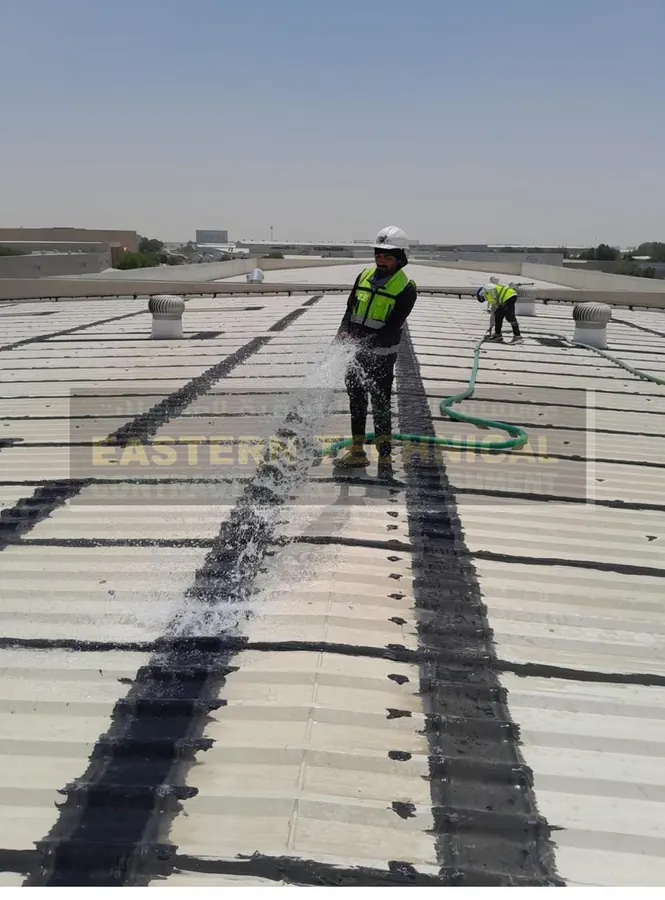
Dryness is equally critical. Applying a system over moisture can trap water below the membrane. In hot climates, that moisture may vaporize and create blisters as roof temperatures rise. Contractors should check substrate condition and weather windows rather than relying on appearance alone.
The Details That Need a Different Solution
Large roof areas are visible, but roof details determine whether the waterproofing system succeeds. A flat-looking coating across the panel field is not enough if the gutter corners, penetrations, and transitions remain weak.
Joints around pipes, vents, skylights, smoke vents, and equipment curbs require flexible waterproofing that can accommodate movement. Gutters need particular care because they hold standing water, collect debris, and experience concentrated flow during rain. A minor crack in a gutter lining can direct water into wall cladding, roof edges, or occupied spaces below.
This is where EPDM rubberized waterproofing solutions can be especially valuable. EPDM-based systems are suited to difficult leak points, transitions, and aging metal structures where flexibility and long-term resistance to weathering are required. They can be used alongside a broader roof coating strategy rather than treated as a separate repair after the main work is complete.
The system must match the detail. A rigid repair at a moving joint will crack. A coating selected only for reflectivity may not be appropriate for ponding water. A membrane that works on a smooth panel may require a different primer or reinforcement approach on oxidized corrugated metal. Good specification is based on exposure, movement, drainage, and substrate condition.
Choosing a Coating System for an Industrial Roof
Selection should be driven by performance requirements, not a generic product label. The right system depends on whether the roof needs corrosion control, waterproofing, UV resistance, heat reduction, repair of localized leaks, or a combination of these needs.
For a warehouse with a sound metal roof and widespread surface aging, a protective coating system may be an efficient rehabilitation option. For a roof with active leaks concentrated at laps and penetrations, the priority should be detailed repairs, reinforcement, and flexible waterproofing before field application. For roofs with severe corrosion or unstable panels, selective replacement and substrate restoration may be the correct first stage.
Facility teams should also ask how the system will perform after installation. Can it be inspected easily? Can future penetrations be sealed without damaging the existing membrane? Is there a maintenance procedure for gutters and roof drains? Is the selected system compatible with earlier repairs? These questions matter because industrial roofs are not static assets. New services, equipment upgrades, and maintenance access will continue throughout the life of the building.
Installation Must Respect an Active Facility
Industrial roofing projects often take place above inventory, machinery, production lines, and occupied logistics areas. The contractor’s work method therefore matters as much as the coating specification.
A controlled installation sequence starts by dividing the roof into manageable zones. Repairs are completed, surfaces are prepared, details are waterproofed, and field coating is applied within planned work areas. This makes quality checks easier and reduces the chance of leaving open or incomplete sections exposed to changing weather.
Material mixing, film thickness, cure time, and reinforcement placement should be monitored throughout the project. Coatings applied too thin may not deliver the required protection. Coatings applied over unprepared areas may look acceptable at handover but fail under heat and rain cycles. Quality control should include visual checks, adhesion verification where appropriate, and a detailed record of repaired sections and treated roof details.
At ETCE KSA, this type of work is approached as an engineered maintenance scope: inspect the asset, identify failure mechanisms, repair the weak points, and install a system that can be maintained after handover. That approach is particularly useful for large facilities where repeated leak repairs are already consuming maintenance budgets.
Maintenance Protects the Investment
A coated roof still needs inspection. It is protected, not maintenance-free. Seasonal checks should focus on gutters, drains, roof edges, service penetrations, damaged areas from maintenance traffic, and places where debris can retain moisture.
After heavy weather, facility teams should inspect for standing water, displaced sealant, blocked drainage, and mechanical damage. Early correction of a small issue is far less disruptive than waiting for water to enter insulation or interior operations. Keeping a record of roof repairs and inspections also helps managers plan budgets and make informed decisions when expansion or equipment changes are proposed.
The best industrial roof coating project is the one that gives a facility manager fewer emergency calls, a clear record of what was repaired, and a roof that remains serviceable through heat, rain, and routine operational change. Start with a detailed roof assessment, insist on proper preparation, and treat every penetration and gutter as a critical part of the waterproofing system.
Related ETCE services
Need this checked on your own roof?
ETCE carries out industrial roof inspections, leak diagnosis, metal roof rehabilitation and EPDM waterproofing across Dammam, Al Khobar, Dhahran, Jubail, Riyadh and Jeddah.
Request a Roof Inspection WhatsApp UsMetal roof waterproofing across Saudi Arabia
ETCE is a metal roof waterproofing company in Saudi Arabia with its head office in Dammam. See our warehouse & factory roof waterproofing service or find your area: