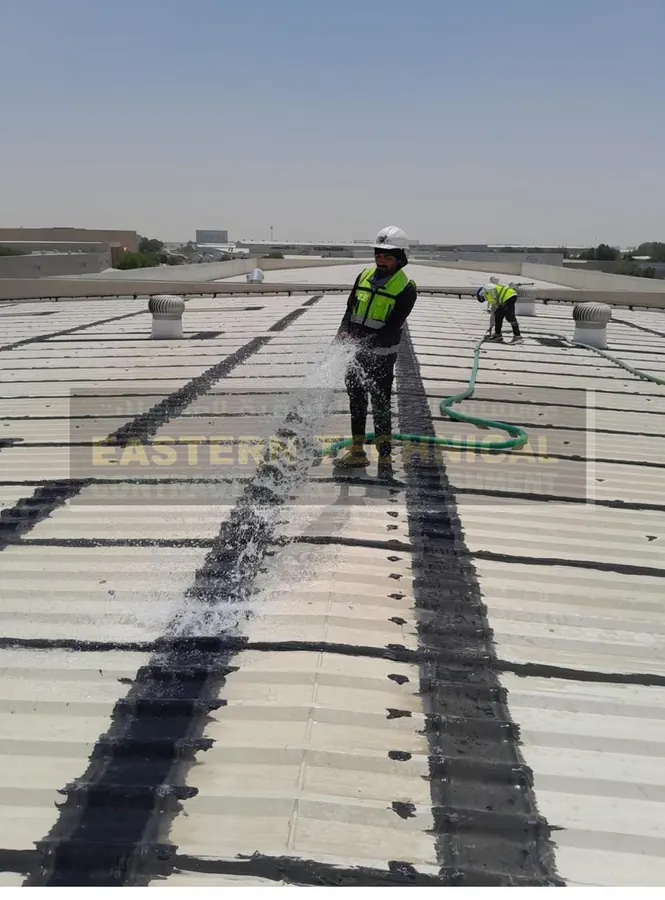
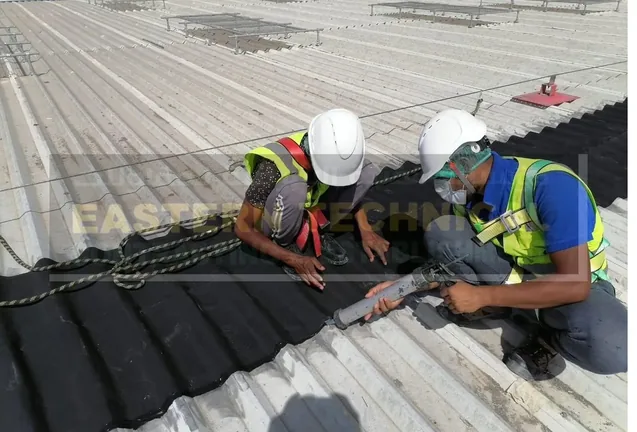
A warehouse roof rarely fails all at once. It starts at the lap joint that opens under heat, the fastener line that loosens under vibration, the gutter that ponds after a dust storm, or the penetration that was sealed once and forgotten. That is why an industrial roof waterproofing guide needs to focus on failure points first, not product claims. For factories, logistics buildings, and storage facilities, waterproofing is not cosmetic work. It protects steel, insulation, inventory, equipment, and operating continuity.
What industrial roof waterproofing actually means
In industrial buildings, waterproofing is not just coating a large roof area and hoping for the best. It is the process of identifying how water enters the building envelope, correcting damaged or weak components, and applying a system that matches the roof type, movement, drainage pattern, and service conditions.
That last part matters. A single-skin sheet roof behaves differently from a sandwich panel roof. A roof with multiple duct supports, skylights, and exhaust penetrations has more risk than a clear span structure with simple geometry. Buildings exposed to high UV, wind-driven rain, thermal movement, dust accumulation, and corrosion need more than a generic patching approach.
The right solution usually combines inspection, surface preparation, local repair, waterproof detailing, and area treatment. If one of those steps is skipped, leaks often return at the same weak points.
The main leak points on industrial metal roofs
Most roof leaks in industrial facilities are predictable. The issue is not whether weak points exist. The issue is whether they are identified early enough.
Fasteners are one of the most common failure points. Over time, they can back out, deform washers, or allow moisture to track into the sheet interface. End laps and side laps are another regular source of leakage, especially where movement and aging sealants have opened gaps. On older roofs, corrosion around overlaps and fixings can create hidden pathways for water entry.
Penetrations deserve special attention. Pipe sleeves, ducts, cable trays, smoke vents, drain points, and skylight curbs interrupt the roof plane and create stress points. These locations expand, contract, and vibrate differently from the main roof sheets. If the waterproofing detail is not engineered for movement, it will split or detach.
Gutters and valley areas also fail frequently. Ponding water increases the time the roof stays wet, accelerates corrosion, and exposes every weak seam. In large facilities, one blocked drain can turn a local defect into a recurring operational problem.
Industrial roof waterproofing guide for system selection
Choosing a waterproofing system for an industrial roof is not about the cheapest square foot rate. It is about matching the system to the substrate, roof condition, leak pattern, and expected service life.
For metal roofs, especially aging corrugated sheets, single-skin sheet roofs, and sandwich panel assemblies, flexibility is critical. The roof moves under daily temperature swings. Any waterproofing layer must tolerate that movement without cracking or losing adhesion at joints and penetrations.
EPDM-based waterproofing is often a strong fit in industrial settings because it performs well at difficult leak points and accommodates movement better than rigid repair methods. It is particularly effective for gutters, flashings, upstands, pipe penetrations, drain areas, skylights, and transitions where standard sealant-only repairs tend to fail. On rehabilitating older metal roofs, it can form part of a more durable repair strategy when the underlying sheet is still structurally serviceable.
That said, not every roof should be treated the same way. If corrosion has already compromised structural integrity, waterproofing alone is not enough. Sections may need replacement, reinforcement, or fabricated components before a membrane or detailing system is installed. A proper recommendation depends on what is failing – the waterproof layer, the sheet, the fastener system, or the drainage design.
Inspection comes before specification
A serious waterproofing contractor should not prescribe a system from photos alone. Industrial roofs need site assessment. Water often enters in one location and appears inside somewhere else. What looks like a panel leak may actually come from a curb, ridge detail, gutter joint, or unsealed service penetration.
A useful inspection should document roof type, roof age, visible corrosion, open laps, damaged sealants, ponding zones, fastener condition, insulation wetness where accessible, drainage performance, and the condition of previous repairs. It should also separate urgent leak control from long-term rehabilitation work.
This is where many projects go wrong. The client asks for leak repair, but the contractor prices only what is visible from ground level or a quick walkthrough. The result is repeated patching, multiple call-backs, and rising maintenance cost. A proper report helps decision-makers compare short-term containment against a longer service-life solution.
Surface preparation decides whether the repair lasts
Industrial roof waterproofing succeeds or fails on preparation. Dust, oxidation, loose coating, oil contamination, and rust all affect adhesion. On active facilities, roof surfaces are often dirtier than expected, especially near exhaust outlets, material handling zones, and areas exposed to airborne contaminants.
Before any membrane, sealant, or repair layer is applied, the roof needs to be cleaned and stabilized. Corroded areas may need mechanical cleaning, treatment, or cut-out replacement. Loose fasteners need correction. Failed sealant needs removal. Open laps need to be reset and detailed correctly.
This is not glamorous work, but it is the difference between a repair that survives one season and one that performs for years. A good waterproofing contractor treats prep as part of the engineered solution, not as optional labor to reduce cost.
Repairs that make sense for active industrial sites
Factories and warehouses cannot always stop operations for roof work. That means waterproofing plans need to account for access, safety, sequencing, and downtime.
Localized repairs are often the right first move when active leaks are threatening production, stock, or equipment. These can include penetration detailing, gutter rehabilitation, fastener line treatment, lap sealing, or targeted membrane installation at known failure points. This approach controls immediate risk without forcing a full roof scope before the site is ready.
But localized work has limits. If the roof has widespread corrosion, dozens of historical patch points, and recurring leaks across multiple zones, piecemeal repair may cost more over time. In those cases, a broader rehabilitation plan is usually more efficient and easier to manage operationally.
The right contractor should be able to do both – stop active leaks fast and also map out the larger corrective scope. That combination matters to facility teams who need response now and budget clarity later.
How to judge durability, not just price
Price comparisons in industrial waterproofing can be misleading. Two proposals may look similar on paper while covering very different levels of work.
A lower quote may exclude detailed treatment at penetrations, drain points, gutters, and roof terminations. It may assume limited preparation, ignore wet insulation, or skip sheet replacement where corrosion is already advanced. Those omissions reduce initial cost, but they usually shift risk back to the owner.
A stronger proposal explains the substrate condition, identifies leak-critical details, defines preparation steps, states what will be repaired or replaced, and clarifies where the waterproofing system begins and ends. That is what decision-makers should compare. Durability is built into scope definition before it shows up in roof performance.
For industrial assets, the real cost is not only material and labor. It is lost production time, damaged inventory, rust progression, repeated access work, and disruption to facility operations.
Why after-service support matters
Even a well-executed roof waterproofing project benefits from follow-up. Industrial roofs stay under stress from heat, movement, maintenance traffic, and new service penetrations added after the original work.
A contractor with inspection, repair, fabrication, installation, and maintenance capability under one umbrella is usually easier to work with over the life of the building. When a new duct is added, a drain detail changes, or a storm exposes a weak area, the same technical team can respond without restarting the learning curve.
That operational continuity is especially valuable on large warehouse and factory portfolios. In Saudi conditions, where UV, sand, and heat accelerate roof aging, maintenance is part of performance. ETCE KSA works in this model – not just as an installer, but as an industrial roof maintenance partner focused on diagnosis, repair strategy, execution, and support.
Industrial roof waterproofing guide for owners and facility teams
If you are managing an industrial roof, start with the roof you actually have, not the system you hope will solve everything. Check where leaks are occurring, how often they return, and whether corrosion, movement, drainage, or failed details are driving the problem. Ask for a real inspection, not a guess. Make sure the proposed solution addresses penetrations, gutters, laps, and fasteners – not just the open field of the roof.
Most of all, treat waterproofing as asset protection, not emergency spending. The best time to correct roof weaknesses is before the next leak reaches inventory, equipment, or steel. A good roof system keeps water out. A good waterproofing strategy keeps operations moving.
Related ETCE services
Need this checked on your own roof?
ETCE carries out industrial roof inspections, leak diagnosis, metal roof rehabilitation and EPDM waterproofing across Dammam, Al Khobar, Dhahran, Jubail, Riyadh and Jeddah.
Request a Roof Inspection WhatsApp UsMetal roof waterproofing across Saudi Arabia
ETCE is a metal roof waterproofing company in Saudi Arabia with its head office in Dammam. See our warehouse & factory roof waterproofing service or find your area: