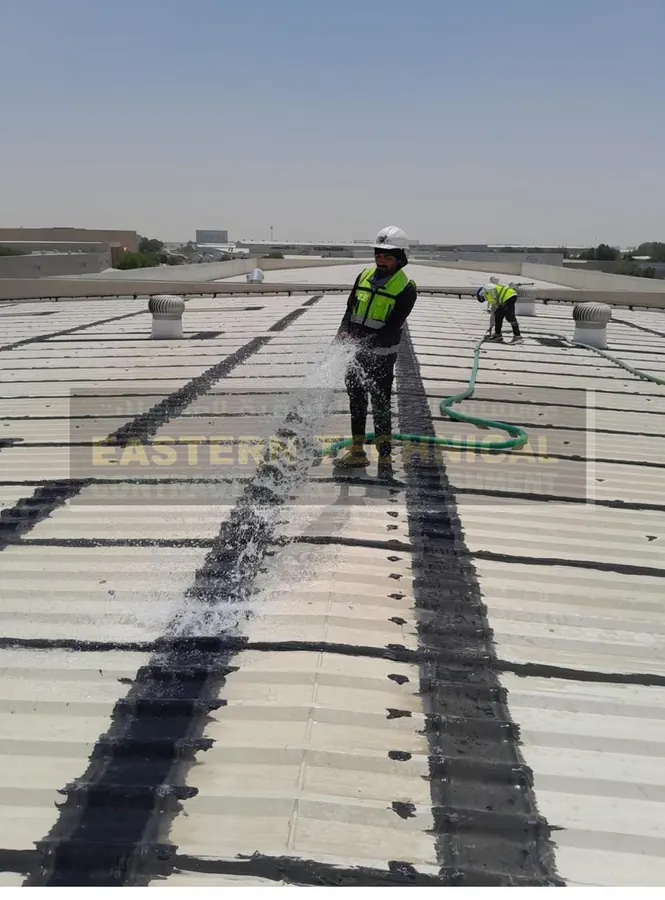
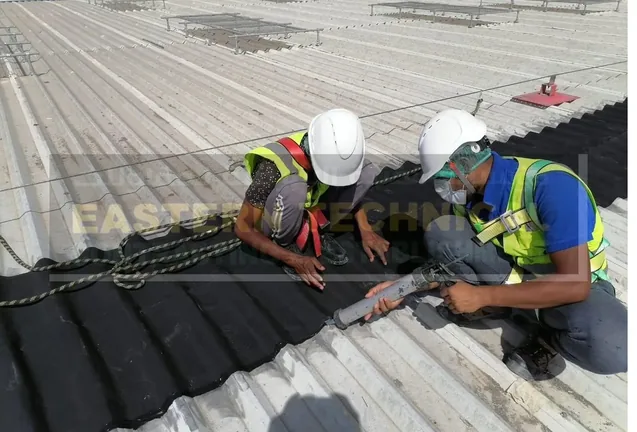
A roof can look serviceable from the yard and still be one storm, one leak path, or one failed fastener away from disrupting operations. That is why a proper saudi industrial roof inspection guide matters for warehouses, factories, logistics buildings, and storage facilities exposed to heat, UV, dust, movement, and aging sheet systems. On industrial sites, roof problems rarely stay at the roof level. They spread into insulation, steel, stock, electrical systems, and maintenance budgets.
Most inspection failures start with one bad assumption – that visible leakage tells you where the actual defect is. On metal and sandwich panel roofs, water often travels. It enters at a penetration, laps across purlin lines, follows fastener holes or joints, and appears several meters away from the source. If the inspection is rushed or done as a simple visual walkover, the report may identify symptoms instead of root causes.
What a Saudi industrial roof inspection guide should actually cover
Industrial roof inspection in Saudi conditions is not just about finding open holes. The roof system is under constant thermal movement. Daytime heat, night cooling, UV exposure, accumulated dust, occasional ponding, and corrosion around wet zones all affect performance. A useful inspection has to look at the roof as a working assembly, not as isolated damage spots.
That means checking the roof sheets or panels, side laps, end laps, mechanical fasteners, support condition, sealant failure, penetrations, gutters, drain points, skylights, vents, parapet details, and interfaces with wall cladding or rooftop equipment. It also means identifying whether the building is dealing with active leakage, long-term moisture entry, rust progression, or a combination of all three.
The difference matters. An active leak may justify immediate waterproofing at concentrated points. Long-term moisture saturation may require localized replacement, corrosion treatment, and rehabilitation of larger roof sections. If the inspection does not separate those scenarios, repair planning becomes guesswork.
Start with the building history, not the ladder
Before anyone steps onto the roof, there should be a short review of building use, roof age, prior repairs, recurring complaint zones, and recent modifications. Many industrial leak issues begin after equipment installation, duct penetration changes, smoke vent work, cable routing, or temporary contractor repairs that were never engineered for long-term service.
A warehouse storing dry goods has different risk exposure than a factory with process exhaust, vibration, humidity, or temperature-sensitive operations. A logistics facility with constant occupancy pressure may need phased repair access and fast-turn corrective work. These are not side details. They affect how inspection findings are prioritized.
A good inspector also asks where leaks have been reported inside, when they occur, and whether they appear after rain, cleaning operations, condensation events, or HVAC cycles. That pattern often narrows the problem much faster than surface-level scanning alone.
High-risk roof areas that deserve close inspection
Most industrial roof failures cluster around details, not wide-open sheet areas. Penetrations are a common starting point. Pipe flashings, ducts, cable entries, supports, and rooftop equipment curbs are all movement points. If they were sealed with incompatible materials, patched repeatedly, or left exposed to UV breakdown, they become predictable water entry locations.
Fasteners are another major issue. On aging metal roofs, fasteners can loosen, back out, corrode, or lose washer integrity. A roof may not need full replacement to have widespread fastener-related leakage. But if hundreds of fastening points are compromised, spot repair alone may not be economical.
Laps and joints also need careful review. Side laps may separate slightly over time. End laps can fail where sealant has dried, shrunk, or lost adhesion. On sandwich panel roofs, joint integrity and edge conditions matter because water entry can affect both panel performance and underlying support areas.
Gutters and drain points deserve more attention than they usually get. Blockages, rusting, failed joints, and standing water can force water back into roof interfaces. The leak then gets blamed on the main roof when the drainage line was the real trigger.
Corrosion changes the inspection strategy
Rust is not just a cosmetic issue on industrial roofs. Surface oxidation may be manageable. Section loss, perforation, and corrosion around laps, fasteners, or gutter lines are different problems entirely. Once corrosion has weakened metal thickness or opened repeated pinhole paths, the inspection has to assess repairability honestly.
This is where many reports become too general. Saying a roof is corroded is not enough. The inspection should identify whether corrosion is localized or widespread, whether it is driven by standing moisture, failed coating, chemical exposure, or trapped debris, and whether the substrate is still sound enough for rehabilitation measures.
In practical terms, some roofs respond well to targeted treatment, waterproofing reinforcement, and protective rehabilitation. Others have reached a stage where patching only delays a larger intervention. The right call depends on extent, not opinion.
A Saudi industrial roof inspection guide must account for heat and movement
Saudi industrial roofs face aggressive thermal cycling. Metal expands and contracts daily. Flashings shift. Sealants fatigue. Penetration details that looked acceptable after installation may open under repeated movement. This is one reason temporary patch materials often fail early on industrial buildings.
An inspection should look for stress at movement-prone interfaces, especially around long sheet runs, raised curbs, roof-mounted units, transitions, and previous repair zones. If the building has mixed materials at one detail, the inspection should consider compatibility and movement rate. Some leaks are not caused by one broken component. They are caused by a detail that was never designed to move correctly.
That is where engineered waterproofing systems become relevant. EPDM-based detailing, when correctly selected and installed, can perform well at difficult points such as penetrations, skylights, gutters, and drain transitions because flexibility matters as much as adhesion. But not every roof or every failure pattern calls for the same treatment. Inspection has to lead the decision, not the other way around.
What a useful inspection report should deliver
For facility teams and procurement stakeholders, the value of inspection is in what happens next. A report should clearly document observed defects, likely causes, urgency level, affected zones, safety concerns, and recommended corrective scope. Photos matter, but photos without diagnosis create more meetings than solutions.
The report should also separate immediate containment items from planned repairs. For example, an active leak above critical operations may need urgent waterproofing and temporary risk control, while less severe deterioration in a remote bay can be scheduled under a broader maintenance plan. That prioritization helps avoid both underreaction and overspending.
Where possible, recommended actions should be grouped into categories such as leak sealing, fastener rectification, penetration waterproofing, gutter rehabilitation, skylight treatment, localized sheet replacement, and corrosion-related restoration. Decision-makers need a path to execution, not just a list of defects.
When inspection should lead straight to action
There are times when waiting for another review adds cost. If water is entering near electrical systems, stock areas, production lines, or structurally sensitive zones, speed matters. The same applies when ponding is severe, gutters are failing, or corrosion is actively opening the roof skin.
For active industrial facilities, response time is part of roof performance. A contractor that can inspect, diagnose, fabricate detail components, execute repairs, and support follow-up maintenance usually reduces downtime better than a fragmented vendor chain. That is one reason many industrial clients prefer a single technical contractor rather than separating diagnosis from execution. In Saudi Arabia, ETCE KSA works in that model because roof failure on an operating site is rarely just a maintenance issue. It is an operations issue.
How often should industrial roofs be inspected?
For most industrial buildings, annual inspection is a sensible baseline, with additional checks after major rain, wind events, new rooftop work, or repeated leak complaints. Older roofs, high-value facilities, and buildings with a history of failed repairs often need more frequent review.
The right interval depends on roof age, construction type, exposure, and consequence of failure. A newer warehouse with no penetrations may need a lighter schedule than an aging factory roof with multiple curbs, drains, and corroded zones. The key is consistency. A roof that is only inspected after leaks become visible is usually already costing more than it should.
A good roof inspection does not promise perfect conditions forever. It gives you a clear picture of risk, remaining serviceability, and the smartest repair path before small defects become operational losses. If your facility depends on dry stock, safe systems, and predictable maintenance spending, that clarity is worth getting early.
Related ETCE services
Need this checked on your own roof?
ETCE carries out industrial roof inspections, leak diagnosis, metal roof rehabilitation and EPDM waterproofing across Dammam, Al Khobar, Dhahran, Jubail, Riyadh and Jeddah.
Request a Roof Inspection WhatsApp UsMetal roof waterproofing across Saudi Arabia
ETCE is a metal roof waterproofing company in Saudi Arabia with its head office in Dammam. See our warehouse & factory roof waterproofing service or find your area: