A metal roof rarely fails all at once. It usually starts at a fastener, lap joint, gutter edge, penetration, or small area where the protective coating has broken down. Recognizing the top signs of roof corrosion early gives facility teams time to repair the source of exposure before water reaches insulation, purlins, equipment, inventory, or occupied work areas.
For warehouses, factories, logistics buildings, and storage facilities, corrosion is not only a cosmetic concern. It can reduce sheet thickness, weaken connections, open leak paths, and create safety issues that become more costly during an emergency repair. Heat, UV exposure, wind-driven rain, airborne salts, dust accumulation, and standing water can all accelerate the process, particularly on aging single-skin and sandwich-panel roof systems.
Top Signs of Roof Corrosion to Check First
Rust staining around screws and fasteners
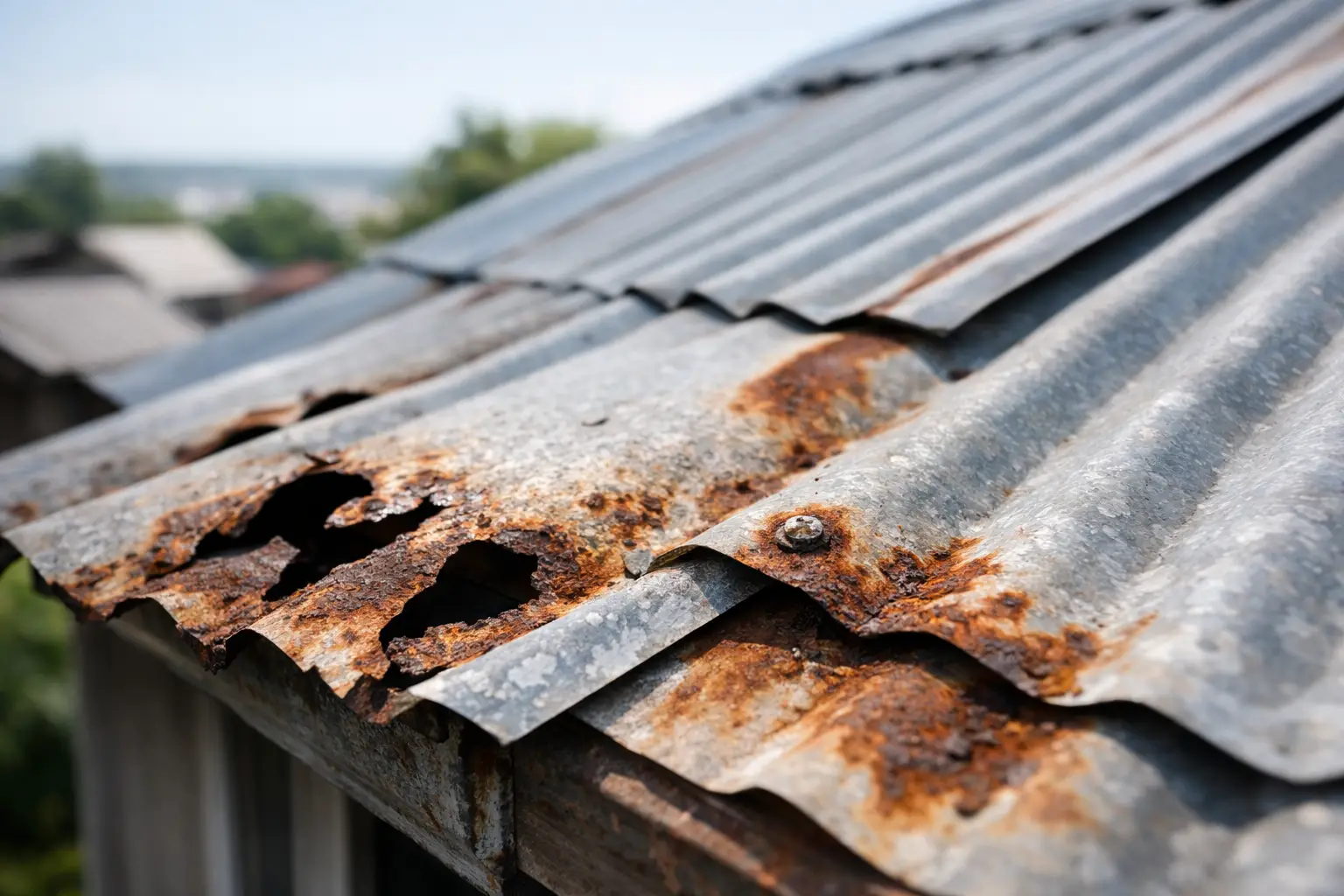
Orange or brown staining around screws is one of the earliest visible warnings. The fastener head, washer, or the sheet directly around it may be deteriorating. Once a washer loses compression or a screw begins to corrode, rainwater can enter through the fixing point even when the surrounding roof sheet still appears sound.
Do not treat every stained fastener as an isolated issue. Repeated staining across one slope can indicate that the fasteners are reaching the end of their service life, that incompatible metals are reacting, or that water is routinely ponding around the fixing lines. A proper assessment should check fastener condition, washer integrity, sheet thickness, and the seal beneath each fixing.
Blistered, peeling, or faded protective coatings
Paint and factory-applied coatings are the first defense against corrosion. When coatings blister, crack, chalk heavily, peel, or wear through, bare metal becomes exposed to moisture and contaminants. This often appears first on roof edges, high-traffic maintenance routes, areas below discharge points, and locations exposed to harsh sunlight.
Fading alone does not always mean the roof is corroding. However, fading combined with rough texture, exposed metal, flaking finish, or red-brown staining requires attention. The repair approach depends on the roof's condition. Localized coating failure may be treated through surface preparation and targeted protection, while widespread failure can require a roof rehabilitation system designed for the entire roof assembly.
Pitting and pinholes in metal sheets
Pitting is localized corrosion that forms small cavities in the metal. At first, these cavities may look like dark specks or rough, crater-like spots. As corrosion continues, pitting can create pinholes that allow water into the building, often without an obvious large opening on the roof surface.
Pitting is especially serious because the visible damage can be smaller than the actual loss of metal thickness. It may develop around accumulated dirt, under wet debris, near chemical exhausts, or in coastal and industrial environments. If pitting is found, an inspection should determine whether the damage is limited to the top sheet or whether moisture has already affected insulation, internal liners, or structural members.
Corrosion at laps, seams, and panel overlaps
Metal roof sheets rely on laps and seams to shed water. When sealant ages, fasteners loosen, or debris holds moisture along an overlap, corrosion can begin between sheets where it is difficult to see. Staining at the edge of a lap, lifted sheet edges, separated sealant, and recurring leaks after rain are common indicators.
These areas should not be repaired by simply applying sealant over loose, dirty, or corroded metal. The affected joint needs cleaning, preparation, and a repair detail that accounts for movement, water flow, and sheet condition. EPDM-based waterproofing details can be particularly effective at difficult joints when properly designed and installed over prepared substrates.
Rusted gutters, valleys, and drain points
Gutters and drain points carry concentrated water flow, making them high-risk corrosion zones. Leaves, sand, dust, and roof debris can block drainage and create standing water. Over time, the metal softens, coatings fail, seams open, and water can overflow onto wall cladding or back under the roof sheet.
Look for rust at gutter joints, water marks on exterior walls, sagging sections, cracked sealant, and areas where water remains after rainfall or cleaning. A gutter repair should address more than the visible hole. The team must identify why water stayed in that location, whether due to inadequate falls, blocked outlets, damaged supports, undersized drains, or failed waterproofing at the gutter-to-roof connection.
Damp insulation, interior stains, and recurring leaks
Corrosion may be hidden above the roof line long before a hole is visible from outside. Ceiling stains, wet insulation, drips around roof penetrations, corrosion on internal steel, and recurring leaks near the same location can all point to a deteriorated roof detail.
A leak does not always occur directly below its entry point. Water can travel along sheet laps, insulation facings, purlins, cables, and duct supports before it appears inside. This is why leak tracing requires systematic inspection rather than patching the interior stain or applying a surface coating at the first visible location.
Deterioration around penetrations and rooftop equipment
Pipes, ducts, skylights, smoke vents, curbs, exhaust points, and service openings interrupt the roof's water-shedding surface. They also create edges where sealants and flashings are exposed to movement, heat, and UV. Corrosion around these details is often caused by failed flashing, trapped moisture, incompatible materials, or repairs that were applied without proper surface preparation.
Warning signs include cracked sealant, loose flashing, staining below equipment bases, lifted membrane edges, and rust spreading outward from a penetration. These repairs need flexible waterproofing details that remain sealed as the roof sheet and equipment move at different rates during temperature changes.
Why Roof Corrosion Accelerates on Industrial Buildings
Corrosion requires moisture, oxygen, and exposed metal, but operating conditions determine how quickly it spreads. Buildings close to coastal areas may experience salt-laden air. Manufacturing sites may have airborne chemicals or exhaust that affect protective coatings. In dry regions, dust can collect in gutters and laps, then hold moisture when rain arrives or when roofs are washed.
Poor drainage is a major multiplier. Water that drains quickly from a sound roof may cause little damage, while the same water held in a blocked gutter or low spot can steadily attack coatings, fasteners, and seams. Thermal movement also matters. Long metal sheets expand and contract, stressing sealants and flashing details over time.
When a Local Repair Is Enough and When Rehabilitation Is Needed
A localized repair can be effective when corrosion is limited, the metal remains structurally sound, drainage is working, and adjacent coatings are intact. Typical work may include replacing failed fasteners, treating prepared rusted areas, repairing a seam, and waterproofing a specific penetration or gutter joint.
Rehabilitation is often the better decision when corrosion is widespread, leaks appear in multiple locations, coatings are failing across large roof areas, or past patches have become a maintenance cycle. In those cases, a planned system can protect the roof surface and vulnerable details together instead of leaving multiple weak points between isolated repairs.
The right scope depends on the roof's age, remaining metal thickness, substrate condition, operational requirements, and whether the facility can tolerate phased work. A roof with significant structural loss may require sheet replacement before any waterproofing system is installed. Waterproofing should protect a viable substrate, not conceal unsafe deterioration.
What a Professional Roof Inspection Should Confirm
An industrial roof inspection should document more than visible rust. It should identify the location and severity of corrosion, check fasteners and laps, examine gutters and drain paths, inspect penetrations, assess coating condition, and trace active leak routes. Where needed, the inspection should also review internal signs such as wet insulation, corroded supports, and water staining.
A detailed report gives maintenance and procurement teams a basis for prioritizing work. Immediate leak points can be stabilized first, while larger rehabilitation can be scheduled around production, stored goods, and access requirements. For active facilities, this planning reduces disruption and avoids spending repeatedly on short-life repairs.
ETCE KSA approaches metal roof maintenance as an engineered site condition, not a one-size-fits-all patch. The objective is to identify the failure mechanism, prepare the affected areas correctly, and install a repair or waterproofing detail that performs under actual industrial exposure.
The most useful action is to inspect at the first sign of staining, coating damage, or repeat leakage. Small corrosion areas are easier to control when the metal still has strength, drainage can still be corrected, and repairs can be planned before the next weather event turns a manageable defect into operational downtime.
Related ETCE services
Need this checked on your own roof?
ETCE carries out industrial roof inspections, leak diagnosis, metal roof rehabilitation and EPDM waterproofing across Dammam, Al Khobar, Dhahran, Jubail, Riyadh and Jeddah.
Request a Roof Inspection WhatsApp UsMetal roof waterproofing across Saudi Arabia
ETCE is a metal roof waterproofing company in Saudi Arabia with its head office in Dammam. See our warehouse & factory roof waterproofing service or find your area: